Article
Practical First and Next‑Home Strategies for Rose Bay Buyers
A clear, decision‑grade guide to buying your first or next home in Rose Bay and harbourside Sydney, with numbers, options and a one‑week action plan.
Key Takeaway
This article explains how Australians can plan a first or next home purchase in Rose Bay by clarifying borrowing capacity, choosing between units, houses, nearby suburbs or rentvesting, and structuring loans safely. It notes that housing costs above roughly 30–40% of net income increase financial stress risk and that APRA’s 3% buffer significantly reduces borrowing capacity. Readers are given concrete examples, comparison tables and a one‑week action plan to create a decision‑ready strategy this week.
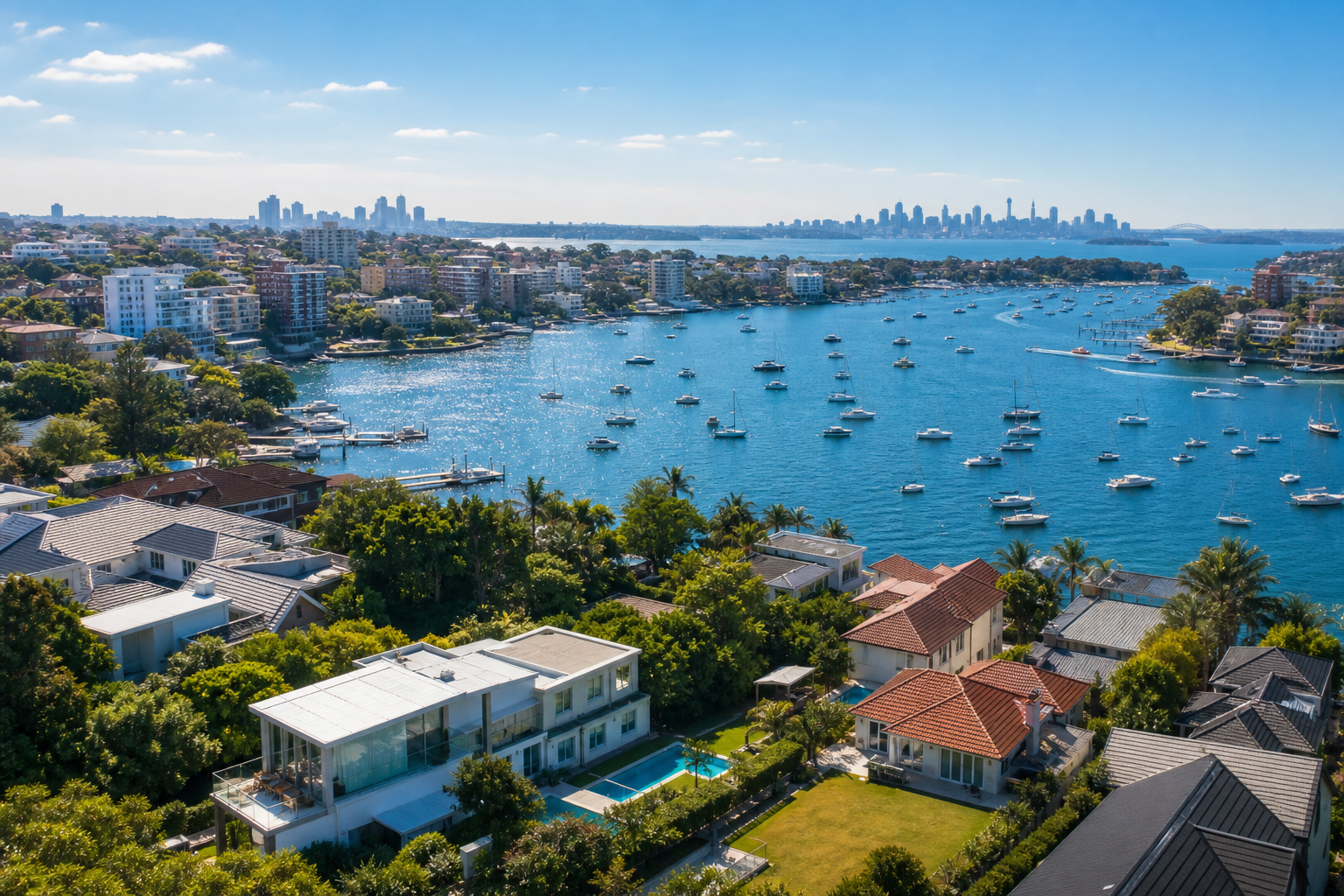
Buying in Rose Bay is less about finding a “dream property” and more about choosing the right strategy for your first or next home. A good Rose Bay plan combines realistic borrowing capacity, the right property type and a loan structure that still works if rates or your income move. This guide shows you, in plain English, how to build that plan and what to do this week.
We’ll cover practical paths for first‑home buyers, upgraders, self‑employed clients and investors who want to live harbourside without over‑stretching themselves.
1. What a Rose Bay home strategy actually is (and isn’t)
A “first or next home strategy” in Rose Bay is simply a set of clear decisions about:
- Where you buy – Rose Bay proper vs nearby suburbs like North Bondi, Dover Heights, Double Bay or Bellevue Hill.
- What you buy – unit vs semi vs house, new vs older, strata vs Torrens.
- How you finance it – deposit source, loan size, repayment structure and buffers.
- What role the property plays – home only, home + future upgrade stepping stone, or part of a longer‑term investment plan.
It’s not about timing the absolute bottom or finding a unicorn deal.
In a premium suburb like Rose Bay, the families who end up in the homes they want usually do three things well:
- They set guardrails (maximum loan, maximum repayment as a share of income, minimum cash buffer).
- They sequence moves (e.g. unit first, then semi or house; or rentvest now, move in later).
- They match lending structure to life plans (kids, school zones, business growth, retirement).
If you can get those decisions roughly right this week, you’re already ahead of most buyers.
2. Can you actually afford Rose Bay? Getting a clean number
Before you fall in love with a harbourside listing, you need two numbers:
- Bank‑assessed borrowing capacity – what a lender is likely to approve.
- Personal comfort limit – the maximum repayment you’re genuinely happy to live with.
2.1 How banks think about Rose Bay borrowers
Most banks don’t care where the property is; they care whether you can repay the debt under stress. For Rose Bay‑level prices, three rules matter:
- APRA buffer: Banks must test your loan at at least 3% above the actual rate (APRA). If a rate is 6% p.a., your affordability is tested around 9%.
- Income vs debts: They look at your tax‑verified income (PAYG or self‑employed), subtract a standard living cost like HEM, then layer in all debts (home, car, HECS, credit cards – usually the limit, not just the balance).
- Debt‑to‑income ratios: Many lenders become cautious when total debt is more than 6× your gross income, especially at higher price points.
For high‑income, self‑employed or complex situations, a broker who understands both residential and business lending can separate personal and business debts cleanly, improving how your situation looks on paper (see /insights/coordinating-personal-company-smsf-borrowing-premium-property-plan).
2.2 Your personal stress test
Regulators focus on whether you can repay. You also need to ask whether you’ll still like your life while doing it.
A good rule of thumb from Australian housing research is that housing costs above roughly 30–40% of net take‑home income are linked with higher financial stress, particularly when it’s tied up in a single high‑value property.
So for example, if your household brings in $18,000 per month after tax:
- 30% of that is $5,400.
- 40% is $7,200.
If a Rose Bay loan pushes your repayments towards $8,000–$9,000 a month, you’re probably outside a comfortable zone unless your income is very resilient and you have strong buffers.
2.3 A worked example: a typical Rose Bay apartment
Assume you’re eyeing a Rose Bay apartment around $1.5 million.
- 20% deposit (no LMI) = $300,000 plus stamp duty and costs.
- Loan amount = $1.2 million.
- On a 30‑year principal and interest loan at an illustrative 6% p.a.:
- Monthly repayment ≈ $7,200.
If your household net income is around $18,000 per month, that repayment is about 40% of take‑home pay. That may be fine for a high‑earning couple with stable roles and no kids yet; much less so for a single income with children in private school.
This is why the first real decision is often not “Rose Bay: yes or no?” but “Rose Bay unit vs bigger home somewhere close by?”
The strategy continues below
You've seen the problem and the groundwork — now unlock the exact steps our CPA-certified brokers use, including 6 more sections. Enter your email for instant, free full access.
Free access. No spam — unsubscribe anytime. Your details stay confidential.
Frequently asked questions
How much deposit do I really need to buy in Rose Bay?▾
Is it realistic to buy my first home in Rose Bay?▾
Should I sell first or buy first when upgrading in Rose Bay?▾
How do self-employed buyers get a loan for a Rose Bay property?▾
Is rentvesting a good idea if I want to live in Rose Bay eventually?▾
Speak with a specialist advisor
Confidential consultation, bespoke advice for your situation.