Article
How to Finance a Move into Key School Zones Around Rose Bay
A decision-grade guide to funding a move into key Rose Bay school zones, balancing price, borrowing capacity, tax and risk so your family can act confidently this week.
Key Takeaway
To finance a move into key school zones around Rose Bay, buyers should first define target catchments, then test realistic borrowing capacity against actual sale prices and a 3% APRA serviceability buffer. With Eastern Suburbs housing stress rising and over 28% of Australian mortgage holders ‘At Risk’, structuring buffers via offsets and conservative repayment-to-income ratios is critical. A practical next step is a broker-led scenario review comparing buy-now, rent-then-buy and renovate options over a 5–10 year horizon.
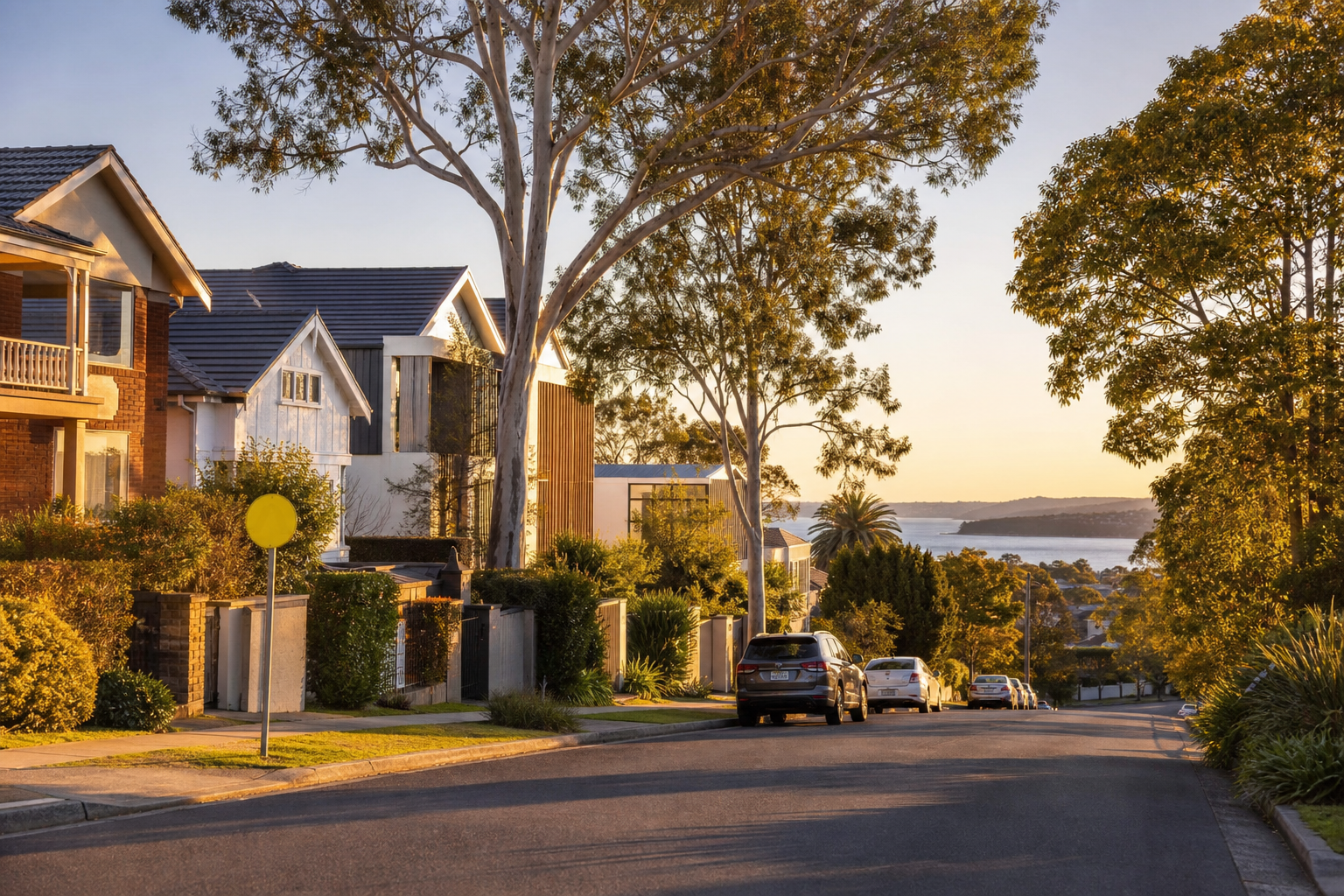
Moving into a key school zone around Rose Bay means matching the suburbs and streets you want with a loan you can safely afford, after stress-testing repayments and buffers against your real household numbers. The finance “win” is not just getting approved, but staying out of mortgage stress while you lock in the school and lifestyle you care about.
In this guide we’ll walk through what Rose Bay school‑zone buyers should spend, how banks will view you, and the main loan structures and timing options that actually work in this market.
1. Start with schools and real Rose Bay prices, not the bank calculator
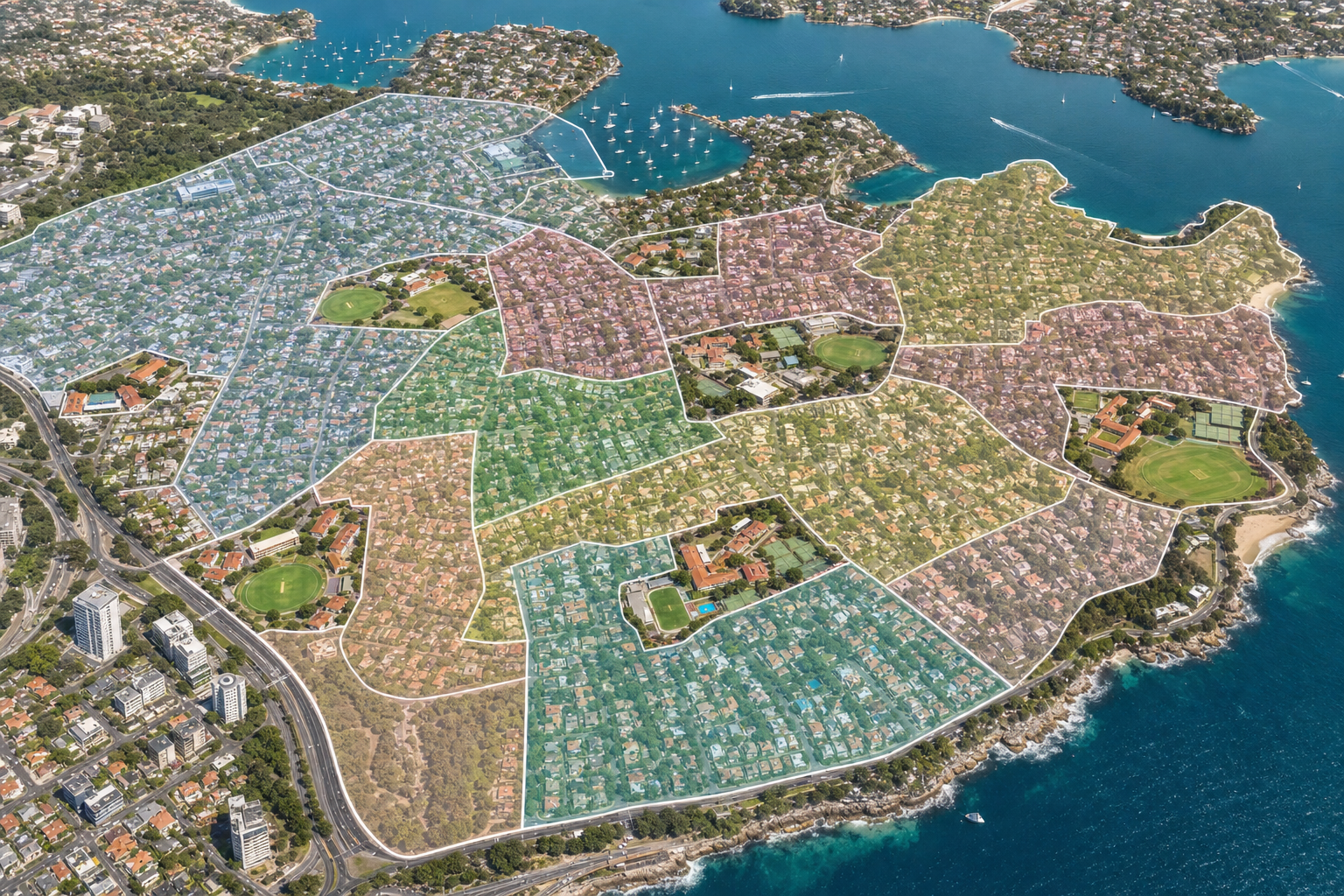
The first step is brutally simple: define the actual school zones or private school catchments you care about, then check what houses and family-sized apartments are really selling for there.
1.1 Map school catchments to price brackets
Around Rose Bay, families usually target some mix of:
- Public catchments (e.g. Rose Bay Public, Vaucluse Public, Bellevue Hill Public)
- High-demand private schools (e.g. around Kambala, Kincoppal–Rose Bay, Cranbrook, Scots, Reddam College)
Property within easy walking or practical commuting distance can sit 5–20% higher than similar homes outside the tightest “school walk” zones.
A quick working budget example:
- Target home budget: $3,000,000 (semi or older freestanding)
- 20% deposit + costs: roughly $700,000–$750,000 (including stamp duty and legals)
- Loan needed: ~$2,300,000
On a 30‑year principal-and-interest loan at an indicative 6.0% p.a. (illustrative only):
- Monthly repayment ≈ $13,788
APRA requires banks to test you at roughly 3% above the actual rate (so around 9.0%). Your assessed repayment would be closer to $18,500 per month, and your income needs to handle that.
If this already feels tight, you may need to slightly step back from the most premium streets, or consider a staged approach (buy a smaller home now, upgrade later). For a broader lifestyle lens across Rose Bay, see /insights/family-moves-schools-lifestyle-rose-bay.
1.2 Compare options: buy-in, renovate or move sideways
| Strategy | Typical price range* | Finance features | Pros | Watch-outs |
|---|---|---|---|---|
| Buy freestanding/semi in premium zone | $3.0m–$5.0m+ | High loan size, tight buffers | Long-term school + lifestyle solution | Mortgage stress, overbidding at auction |
| Family apartment / townhouse near schools | $2.0m–$3.2m | Lower loan, easier buffers | Walking distance at lower cost | Strata, less space, harder teen years |
| Stay put and renovate | $500k–$1.5m in works | Construction/reno loan, valuations key | Keeps costs down, avoids stamp duty | Still outside preferred zone, build risk |
| Sideways move slightly out of Rose Bay | $1.8m–$3.0m | Similar loan, different suburb | More space, lower price per sqm | School commute complexity |
*Indicative only. Always check current local results.
For a deeper dive into comparing upgrade vs renovate vs sideways moves, see /insights/planning-school-zone-lifestyle-moves-matching-finance-structures.
2. How lenders see you: families, self‑employed and investors
Your profession, income structure and existing properties all change what you can safely borrow for a school‑zone move.
2.1 PAYG families versus self‑employed owners
PAYG professionals with stable bonuses tend to get clearer, quicker approvals. Self‑employed buyers can absolutely get strong outcomes, but need to present income cleanly.
Lenders will usually:
- Average 2 years of taxable income for self‑employed
- Add back some non‑cash deductions, but not all
- Heavily discount irregular bonuses or distributions
If your accountant has pushed your taxable income down for years, that can cap borrowing. It may be worth “borrowing ready” tax planning one to two years out. For detail, see /insights/self-employed-professionals-complex-income-borrowers-rose-bay.
2.2 Existing home owners: upgrade, keep or rent?
If you already own a property, the key questions are:
- Sell first or buy first (with or without a bridging loan)?
- Keep the old home as an investment, or sell to reduce debt?
- How will negative gearing reforms from 2026–27 change the maths?
The proposed Federal changes will quarantine many rental losses on established properties purchased after 12 May 2026. That makes highly geared, loss‑making investments in established stock less attractive and increases the importance of after‑tax cashflow when upgrading into a premium school zone.
Broadly:
- High non‑deductible debt on the new family home should usually be paid down faster.
- Investment loans need to stand up on post‑tax cashflow, not just deductions.
The strategy continues below
You've seen the problem and the groundwork — now unlock the exact steps our CPA-certified brokers use, including 4 more sections. Enter your email for instant, free full access.
Free access. No spam — unsubscribe anytime. Your details stay confidential.
Frequently asked questions
How much extra do homes in key Rose Bay school zones cost?▾
Should I stretch my budget now to avoid a second move later?▾
Is it better to rent in the school zone and buy later?▾
How do self-employed parents prove income for a school-zone loan?▾
Will negative gearing changes kill the strategy of keeping my old home as an investment?▾
Speak with a specialist advisor
Confidential consultation, bespoke advice for your situation.