Article
Financing High-Density and Mixed-Use Buildings in Green Square
A detailed guide to how banks assess high‑density and mixed‑use buildings in Green Square and Zetland – including key risks, LVR limits, valuation issues and what to check before you buy or refinance.
Key Takeaway
Lenders assess high-density and mixed-use buildings in Green Square as higher risk, so they often reduce maximum LVRs, apply conservative valuations, and scrutinise building quality, investor ratios and commercial exposure. Many banks flag large complexes (100+ units), high investor ownership, small apartments under 50 m², cladding or defect history, and mixed residential–retail podiums. Borrowers should confirm lender appetite for their specific building, stress-test repayments at 2–3% above current rates, and maintain at least six months of living costs and loan repayments in offset before committing.
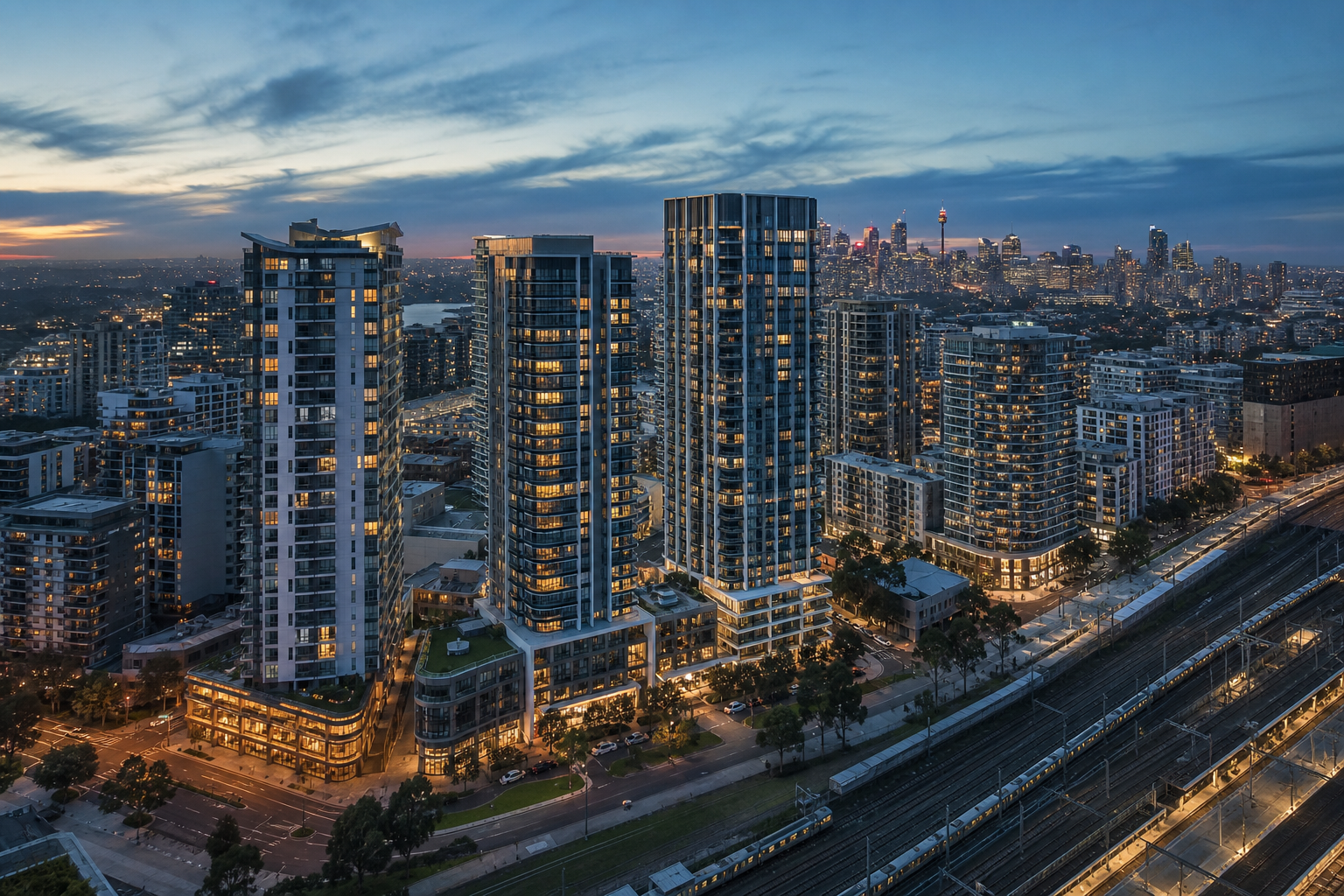
High‑density and mixed‑use buildings in Green Square sit in a grey zone for many lenders. On one hand, they’re exactly the kind of housing the government says we need more of. On the other, banks see them as higher risk – especially in pockets of Zetland, Green Square and Waterloo that already have a lot of similar stock.
In practice, that means tighter lending rules for many buildings: lower maximum LVRs, tougher valuations, extra documentation and, sometimes, outright in‑principle declines on certain complexes.
This guide explains what lenders actually look at with Green Square high‑density and mixed‑use buildings, how that flows through to your borrowing power and approval odds, and what you can realistically do this week to reduce risk before you buy or refinance.
1. What “high‑density” and “mixed‑use” mean for your loan
1.1 Working definitions lenders use
Each bank has its own policy wording, but around Green Square they loosely mean:
-
High‑density
- Large complexes, often 100+ apartments in one development or stage.
- Multiple towers over a shared podium.
- Shared facilities: pools, gyms, rooftop gardens, concierge.
-
Mixed‑use
- Buildings combining residential + commercial space, typically:
- Ground‑floor retail (cafés, restaurants, supermarkets, gyms, childcare).
- Dedicated commercial levels.
- Occasionally hotels or serviced apartments in the same envelope.
- Buildings combining residential + commercial space, typically:
Banks treat these differently from a small block of 6–20 units in a quiet street. Higher perceived risk = more caution.
For a similar discussion focused on Mascot (and why the approach is similar but not identical), see /insights/mascot-high-density-mixed-use-lender-checks.
1.2 Why lenders care more in Green Square and Zetland
Three main reasons:
-
Concentration risk
There are thousands of near‑identical apartments within a few blocks. If demand softens, there’s less scarcity value. -
Valuation and resale risk
In a high‑rise precinct, valuation relies heavily on comparable sales. If the last few sales in your building were discounted, your valuation probably will be too. -
Build quality and headline risk
The market’s become more sensitive to structural defects, water ingress and combustible cladding. A single high‑profile building issue in the inner south can spook valuers and lenders across nearby postcodes.
Lenders don’t publish a list of “green” and “red” buildings. Instead, they overlay extra rules and tests on this type of stock.
2. The core lender checklist for Green Square complexes
2.1 The six big questions every lender asks
Across most banks and non‑banks, the core questions for Green Square high‑density and mixed‑use stock are similar:
-
How big is the development?
- Number of units in the building and in the broader scheme or masterplan.
-
How much of it is investor‑owned?
- Owner‑occupier vs investor vs short‑stay / serviced apartments.
-
How much commercial exposure is there?
- Percentage of floor area or income from commercial usage.
-
What’s the track record on build quality?
- Defects, NCAT litigation, cladding rectifications, special levies.
-
Is the apartment itself ‘standard’ for policy?
- Internal size, layout, car space, storage, balcony, orientation.
-
How easy will this be to resell in a hurry?
- Time on market for recent comparable sales, discounting, developer reputation.
How strict each bank is on those questions will decide whether you can borrow at 90–95% LVR – or if you’ll be capped at 70–80% LVR, or even declined.
2.2 Typical lender responses to perceived risk
Below is an illustrative summary of how policy tightens as risk goes up. Individual banks differ, and live policy changes, but the pattern is consistent.
| Factor | Lower‑risk Green Square building | Higher‑risk Green Square building |
|---|---|---|
| No. of units | <100 units, single tower | 200+ units, multiple towers |
| Investor ratio | 40–60% investors | 70–90% investors / many landlords overseas |
| Commercial area | Ground‑floor retail only, <20% GFA | Multiple commercial levels, >30% GFA |
| Max LVR (OO)* | Up to ~90–95% (no LMI caps assumed) | Often capped around 70–80% |
| Max LVR (INV)* | ~80–90% | Often 60–80% |
| Valuation | Usually meets contract price | More likely to come in short |
| Rate / fees | Standard home‑loan pricing | Risk‑loaded margin or even commercial terms |
*OO = owner‑occupier, INV = investor. Figures are indicative only and vary by lender and your profile.
3. Building‑level red flags lenders watch for
3.1 Size, stage and developer concentration
In Green Square, the line between a ‘normal’ block and a true high‑density complex is fuzzy, but lenders pay attention when:
- The building is one of several towers in a single project.
- There are shared basements and podiums across multiple stages.
- A single developer or builder has delivered hundreds of units in close proximity.
Why it matters:
- Resale risk – if multiple similar apartments hit the market, buyers have a lot of choice.
- Systemic defect risk – if one tower has a serious issue, others built the same way might too.
Valuers will often note this in their report, which credit teams then treat as a prompt to apply tighter policy.
3.2 Investor ratios and short‑stay use
Banks are wary when most units are investor‑owned or used for short‑term letting:
-
High investor ratio can mean:
- More turnover and less community oversight.
- Landlords under pressure if rents soften or new supply comes online.
-
Short‑stay and serviced elements:
- If any part of the building operates like a hotel, some lenders will treat the entire complex as specialised.
- This can push you into commercial‑style terms: lower LVRs, higher rates, shorter loan terms.
If you’re buying for investment, this interacts with the post‑2026 negative gearing and CGT reforms. New‑build apartments may be treated more favourably than established stock for loss deductions, but you need to be comfortable that the building will keep attracting long‑term tenants – not just Airbnb demand.
3.3 Commercial exposure in mixed‑use buildings
Mixed‑use is not automatically a problem, but lenders look at:
-
Percentage of commercial floor space – some cap residential lending if:
- Commercial >20–30% of GFA (gross floor area), or
- Commercial lots generate a large share of total scheme income.
-
Type of businesses:
- Supermarket, pharmacy, office, childcare = usually easier.
- Nightclubs, heavy food (smoky kitchens), noisy gyms = harder.
-
Strata arrangements:
- Separate residential and commercial strata plans are often better than one combined plan.
If commercial exposure is deemed high, some lenders either:
- Decline residential mortgages in that building, or
- Reprice them with a margin, or
- Push you to their commercial lending division.
3.4 Defects, cladding and special levies
Lenders and valuers now probe build quality more explicitly:
- Serious defect history – structural cracking, water ingress, fire safety non‑compliance.
- Cladding – non‑compliant combustible cladding flagged in fire orders or council notices.
- Legal disputes – NCAT proceedings, developer litigation, or class actions.
- Special levies – large special levies to fund rectification work.
These don’t always kill a deal, but they can:
- Reduce the valuation.
- Trigger lower LVR limits.
- Require evidence that rectification work is complete and signed off.
If you’re comparing Green Square to nearby Alexandria, it’s worth reading how similar issues show up on the Alexandria side of the border: /insights/high-density-mixed-use-alexandria-green-square-lending-rules.
4. Apartment‑level checks: size, layout and extras
Even if the building passes, your individual lot still has to meet policy.
4.1 Minimum internal size rules
Many lenders set minimum size limits (excluding balconies and car spaces) for:
- Studio apartments – often 40 m² internal or more.
- One‑bedrooms – often 50 m² internal or more.
Some will go smaller with reduced LVRs or higher rates, but plenty won’t touch:
- Studios under ~35 m².
- Odd layouts with large unusable circulation space.
Green Square and Zetland have many compact stock types. For a focused look at tiny units, minimum size rules and LVR bands, see /insights/buying-small-studio-one-bed-zetland-lvr-valuation-rules.
4.2 Car spaces, storage and shared facilities
Small differences in car space and storage can make a big difference to valuation and resale.
Lenders and valuers look at:
- Type of car space – on‑title vs exclusive use vs licence.
- Configuration – standard vs stacker vs car lift.
- Storage cage – on‑title or separate lot, size, accessibility.
These affect both the valuation and the bank’s comfort level with security. For a detailed breakdown of how this plays into lending across inner‑south apartments, see /insights/car-spaces-storage-cages-shared-facilities-loan-approval.
4.3 Worked example: size and policy impact
Let’s compare two Zetland one‑bed apartments, both at $750,000 contract price.
| Feature | Apartment A | Apartment B |
|---|---|---|
| Internal size | 52 m² | 43 m² |
| Balcony | 10 m² | 8 m² |
| Car space | Standard on‑title | Stacker, licence only |
| Storage | 4 m² on‑title | None |
| Building | 90 units, low commercial exposure | 320 units, podium retail |
| Lender outcome (indicative) | Max LVR 90–95% OO | Max LVR 70–80% OO or decline |
Same buyer, same income – but very different lending terms purely because one apartment is much closer to policy sweet spot.
The strategy continues below
You've seen the problem and the groundwork — now unlock the exact steps our CPA-certified brokers use, including 9 more sections. Enter your email for instant, free full access.
Free access. No spam — unsubscribe anytime. Your details stay confidential.
Frequently asked questions
Will every bank treat my Green Square building as high-density?▾
Can I still get a 90–95% LVR loan in a large Zetland tower?▾
How do I find out if my building has been blacklisted by lenders?▾
What happens if my valuation comes in below the contract price?▾
Are strata levies in high-density buildings a problem for lenders?▾
Is a mixed-use building with shops underneath harder to finance?▾
Should I avoid high-density buildings completely as a first-home buyer?▾
Speak with a specialist advisor
Confidential consultation, bespoke advice for your situation.