Article
Rent Nearby or Buy in Dover Heights? A Numbers-First Call
Should you rent nearby or stretch to buy in Dover Heights? This quick guide walks through real-world numbers, risks and one-week tests so you can decide with confidence.
Key Takeaway
This article explains whether it’s better to rent nearby or buy in Dover Heights by comparing after‑tax cashflow, risk buffers, and time horizons. Using a $4m house example with a 20% deposit, it shows ownership can cost $60k–$80k more per year in cash than renting, especially once a 3% APRA serviceability buffer is applied. The key insight: if total housing costs stay under ~35% of net income and you retain a 3–6 month buffer, buying can work; otherwise, renting nearby or rentvesting is safer.
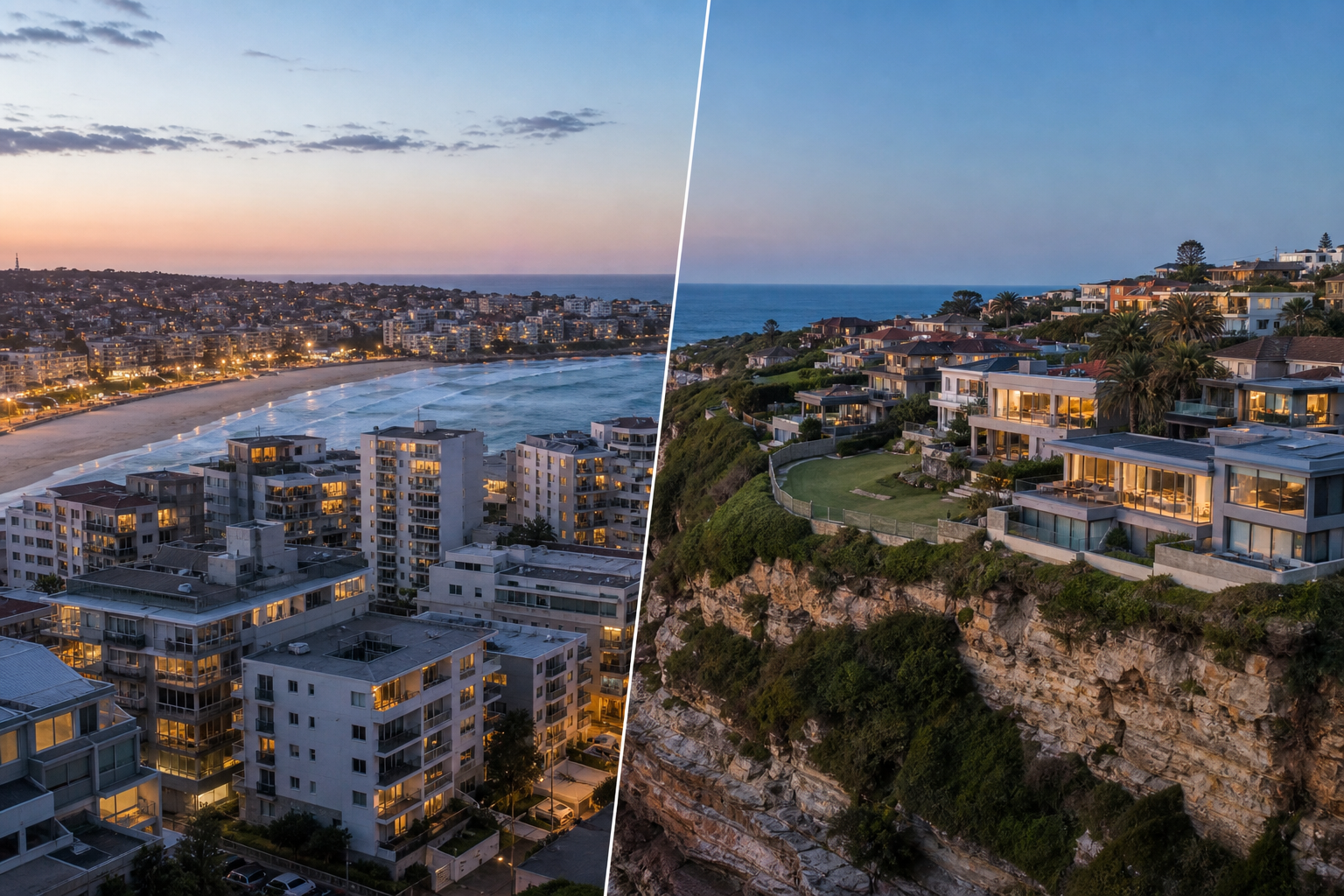
Buying in Dover Heights usually means much higher cash outlay and risk than renting nearby, even if the bank says you can afford it. The clean way to decide is to compare after‑tax cashflow, buffers and your 5–10 year plan, not just headline rent versus mortgage.
In many 2026 scenarios, renting in Bondi or Rose Bay and investing the difference will be safer than stretching to buy. But if ownership costs sit under ~35% of take‑home pay with strong buffers, buying can still stack up.
Step 1 – A realistic Dover Heights vs nearby numbers snapshot
Let’s use rounded, indicative numbers only – you must run your own figures.
Scenario A – Buy a Dover Heights house
- Purchase price: $4,000,000
- Deposit: 20% ($800,000) + costs (~$220,000 stamp duty/fees)
- Loan: $3,200,000, principal & interest, 30 years
- Interest rate: 6.0% p.a. (stress-test at 9.0% per APRA’s 3% buffer)
Indicative repayments at 6.0%
Approx P&I repayment: $19,200 per month ($230,000 p.a.).
Add:
- Council/insurances/maintenance: say $18,000–$25,000 p.a.
Total ownership cash cost: ~$248,000–$255,000 p.a.
Scenario B – Rent nearby (Bondi / Rose Bay)
- Quality family house / large townhouse: $3,000–$3,500 per week
- Annual rent: ~$156,000–$182,000
Assume you invest the $800k deposit instead of using it to buy, earning 4–5% before tax.
- Yield at 4.5%: ~$36,000 p.a. before tax
Net housing cost after investment income:
- Low rent side: $156,000 – $36,000 = ~$120,000 p.a.
- High rent side: $182,000 – $36,000 = ~$146,000 p.a.
So, in this rough example, owning might cost $100,000+ more per year in cash than renting nearby, even before tax considerations.
For a more general walkthrough of this calculation, see How To Tell If It’s Cheaper To Buy Than Rent Nearby.
Step 2 – Stress-test both options properly
Numbers only matter if they survive stress. Run these tests on both buy and rent scenarios.
1. Rate shock (for owners and investors)
Model your loan at 3% higher than current (e.g. 6% → 9%).
On a $3.2m loan, repayments at 9% might jump to around $25,800 per month (~$310,000 p.a.).
Ask:
- Does total housing cost stay under 35–40% of net income?
- Do you still have at least 3–6 months of essential spending plus repayments in offset/cash? (6–12 months if self‑employed).
If those answers are no, buying Dover Heights now could be over‑reach.
2. Income or rent shock
If you’re self‑employed or bonus‑heavy, assume:
- 20–30% income drop for a year; and
- no rent rises if you’re an investor.
A simple rule from our broader work: if stressed repayments plus living costs consume more than ~40% of net income with under a three‑month buffer, the risk is getting uncomfortable.
The strategy continues below
You've seen the problem and the groundwork — now unlock the exact steps our CPA-certified brokers use, including 3 more sections. Enter your email for instant, free full access.
Free access. No spam — unsubscribe anytime. Your details stay confidential.
Frequently asked questions
Is it always cheaper to rent in Bondi or Rose Bay than buy in Dover Heights?▾
What if I’m a first‑home buyer wanting Dover Heights long‑term?▾
How does tax change the rent vs buy decision?▾
Speak with a specialist advisor
Confidential consultation, bespoke advice for your situation.