Article
Rent Nearby or Buy in Rose Bay in 2026? A Numbers-First Guide
Clear, 2026-specific numbers comparing renting nearby versus buying in Rose Bay, including cashflow, buffers, and risk tests you can run this week.
Key Takeaway
This article compares renting nearby versus buying in Rose Bay in 2026 using practical cashflow tests and worked numbers. With mortgage stress affecting over 30% of borrowers nationally and the RBA cash rate around 4.35%, Rose Bay purchases can push households beyond safe repayment levels. The guide shows how to model ownership costs, nearby rent options, and a 3% rate buffer so readers can choose between buying, rentvesting, or waiting, based on this year’s income and savings.
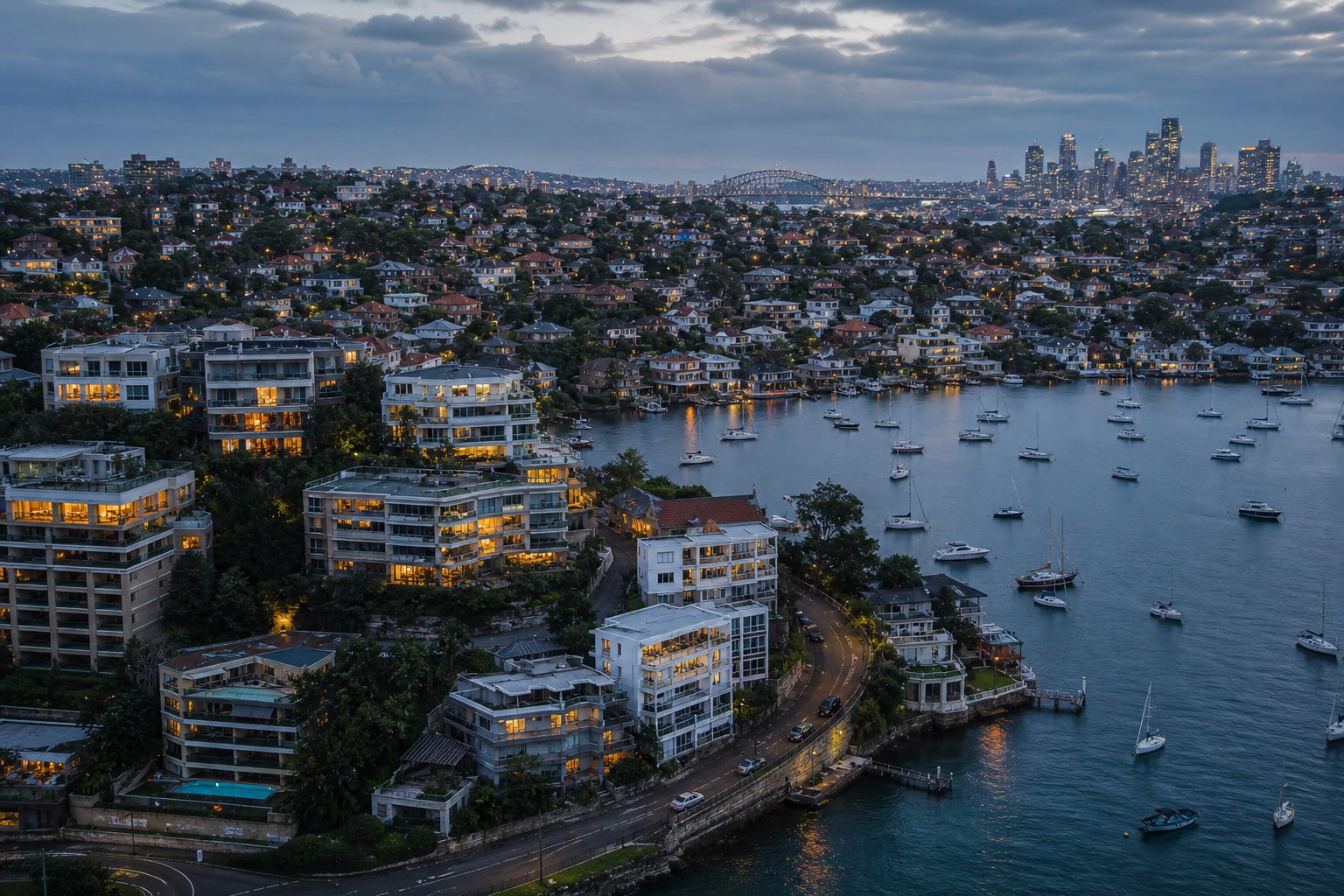
If you’re choosing between renting nearby and buying in Rose Bay in 2026, start with cashflow: for many households it’s currently cheaper and safer to rent a quality unit in a nearby suburb and invest the difference than to stretch for a Rose Bay mortgage. The right answer depends on your deposit, income stability, long‑term plans and how you handle risk in a high‑rate environment.
Here’s a clear framework you can run through this week.

1. What Rose Bay actually costs to buy in 2026
Rose Bay is a prestige market. You don’t need exact data to make a decision, but you do need realistic brackets.
For a typical entry point 2‑bed unit in 2026, think in this sort of range (illustrative only):
- Purchase price: $1.6m–$1.9m
- 20% deposit plus costs: $360k–$430k (stamp duty, legals, inspections)
- Loan size at 80% LVR: $1.28m–$1.52m
For a small semi or townhouse:
- Purchase price: $2.5m–$3.2m+
- 20% deposit plus costs: $560k–$720k+
- Loan size: $2m–$2.56m
With the cash rate around 4.35% and banks adding margins and the APRA 3% serviceability buffer, you must test numbers at today’s rates and 3% higher.
2. Worked example: buying a Rose Bay unit vs renting in a nearby suburb
Let’s compare a couple buying a 2‑bed unit in Rose Bay versus renting in Randwick and investing the difference. Numbers are rounded and indicative only.
Scenario A – Buy in Rose Bay (unit)
- Purchase price: $1.7m
- Deposit + costs: $400k (genuine savings + some family help)
- Loan: $1.36m, 30 years, P&I
- Rate: 6.3% p.a. (illustrative owner‑occ, P&I)
Monthly repayment (6.3%): about $8,420.
Test at 9.3% (6.3% + 3% APRA buffer): about $11,520.
Add realistic ongoing costs:
- Strata: $1,200/month
- Council + water + insurance: $400/month
- Maintenance sinking fund: $300/month (average over time)
Total monthly ownership cashflow at 6.3%: roughly $10,320.
At a 9.3% stressed rate: roughly $13,420.
Scenario B – Rent in Randwick, invest the difference
- Rent: modern 2‑bed unit in Randwick, $1,150/week ≈ $4,983/month
- Ownership‑equivalent costs (no strata, no rates) avoided: ~$1,900/month
- Assume you invest:
- $3,000/month into offset/cash or diversified investments
Your housing outgoings are about $5,000/month instead of $10,320–13,420.
Side‑by‑side comparison
| Scenario | Monthly housing cost now | Stressed cost (3% higher rates) | Extra cash you hold/invest |
|---|---|---|---|
| A: Buy $1.7m Rose Bay unit | ~$10,320 | ~$13,420 | Minimal after costs |
| B: Rent 2‑bed Randwick + invest diff | ~$4,983 | Rent may rise, no loan buffer | ~$3,000+/month |
This is the core trade‑off in 2026: Rose Bay ownership gives stability and long‑term upside, but with high fixed costs in a period of elevated interest rates and rising mortgage stress (Roy Morgan has over 30% of borrowers “at risk” nationally).
For a deeper, suburb‑agnostic method you can also use the framework in /insights/local-rent-vs-buying-costs-cheaper-own-than-rent.
The strategy continues below
You've seen the problem and the groundwork — now unlock the exact steps our CPA-certified brokers use, including 5 more sections. Enter your email for instant, free full access.
Free access. No spam — unsubscribe anytime. Your details stay confidential.
Frequently asked questions
Is it cheaper to rent or buy in Rose Bay in 2026?▾
How much deposit do I need to buy in Rose Bay safely?▾
What nearby suburbs should I consider instead of buying in Rose Bay?▾
Does rentvesting near Rose Bay make sense in 2026?▾
How do higher interest rates affect the rent vs buy decision in Rose Bay?▾
Speak with a specialist advisor
Confidential consultation, bespoke advice for your situation.