Article
Smart Vehicle Finance Strategies For Busy Mascot Tradies And Service Firms
A practical guide to utes, vans and work vehicles for Mascot tradies and service businesses, covering chattel mortgages, leases, cashflow and tax so you can act this week.
Key Takeaway
Mascot tradies and service businesses should usually prioritise chattel mortgages or commercial leases for work vehicles, keeping terms within the vehicle’s useful life and avoiding unnecessary home security. For a $65,000 ute, a 5‑year chattel at 8% costs roughly $1,317/month, versus $1,058/month with a 30% balloon. The article outlines structures, tax implications, and buffer rules, and concludes that separating business debt from home loans while matching term to asset life is the safest, most flexible approach.
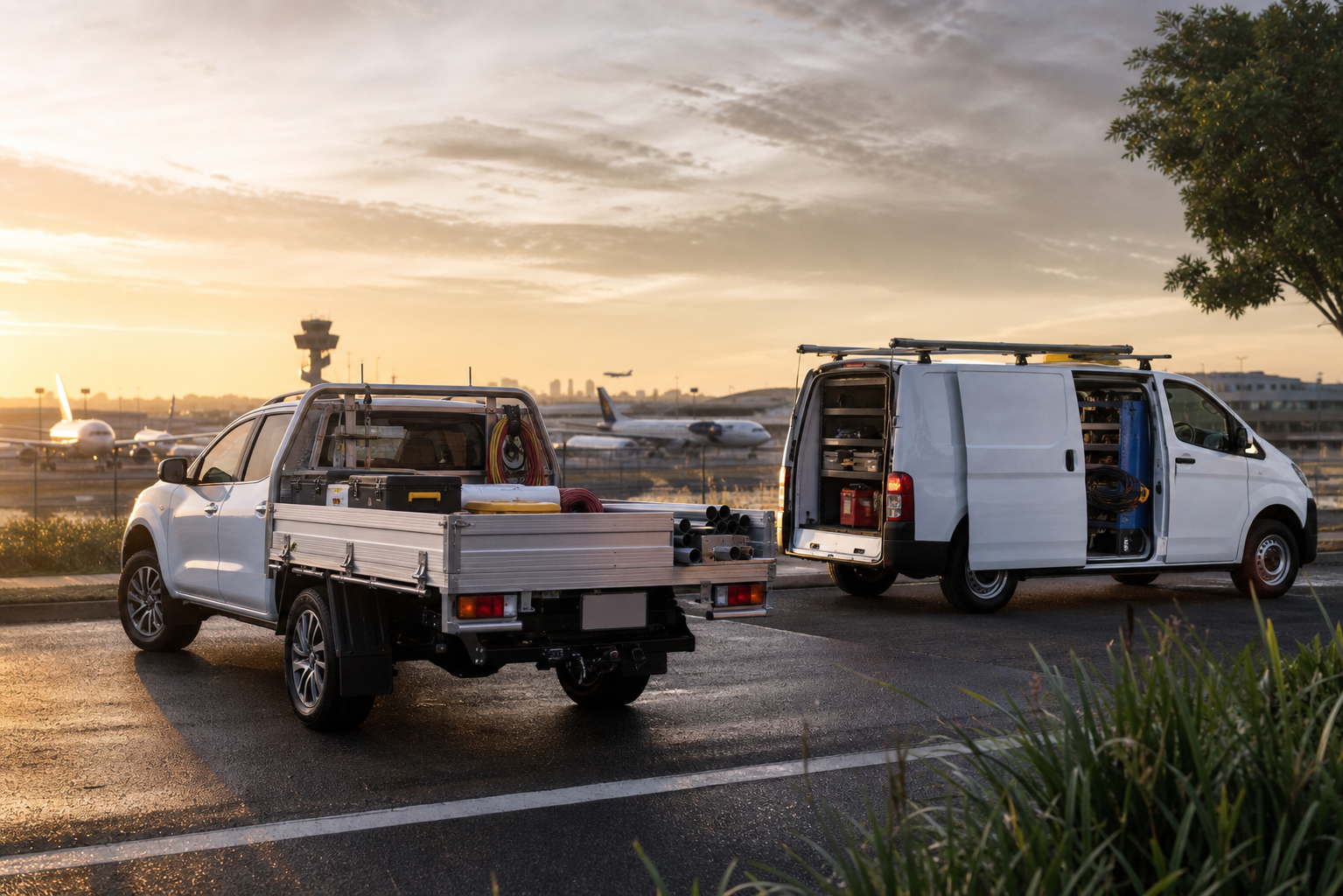
Mascot tradies and service businesses live or die by their vehicles.
If your ute, van or small fleet is off the road, jobs stall, staff sit idle and cashflow dries up. Smart vehicle finance is about far more than the interest rate – it’s how you protect your home, smooth cashflow and stay ready for the next opportunity.
This guide walks Mascot-based electricians, plumbers, HVAC techs, cleaners, airport support firms and mobile service operators through the main options – chattel mortgages, leases, novated leases and lines of credit – so you can choose a structure and a repayment that works this week, not just in theory.
1. What “smart” vehicle finance looks like for Mascot tradies
1.1 A working definition
Smart vehicle finance for Mascot tradies and service businesses means:
- The loan term matches the expected life of the vehicle.
- The facility is clearly business-purpose, separate from your home loan.
- Repayments fit comfortably within your business cashflow and buffers.
- Tax outcomes are defendable to the ATO with clean records.
- Your family home is insulated from business risk wherever possible.
Those five points echo a theme across our business content: match loan term to business purpose and avoid turning your home loan into an overdraft (see also /insights/using-mascot-home-equity-support-small-business-safely).
1.2 Why Mascot is a special case
Mascot businesses have a few unique pressures:
- Airport-dependent work – ground services, freight, catering, logistics and trades that service airport tenancies can see sharp swings in demand.
- Congested roads – delays on O’Riordan Street and around the airport mean time really is money; reliable vehicles matter.
- Higher commercial rents – many Mascot operators run lean and need repayments that flex with seasonal work.
That’s why structuring the right tradie ute finance in Mascot is less about chasing the absolute cheapest rate and more about keeping your buffers and options intact.
2. The main vehicle finance options for Mascot tradies
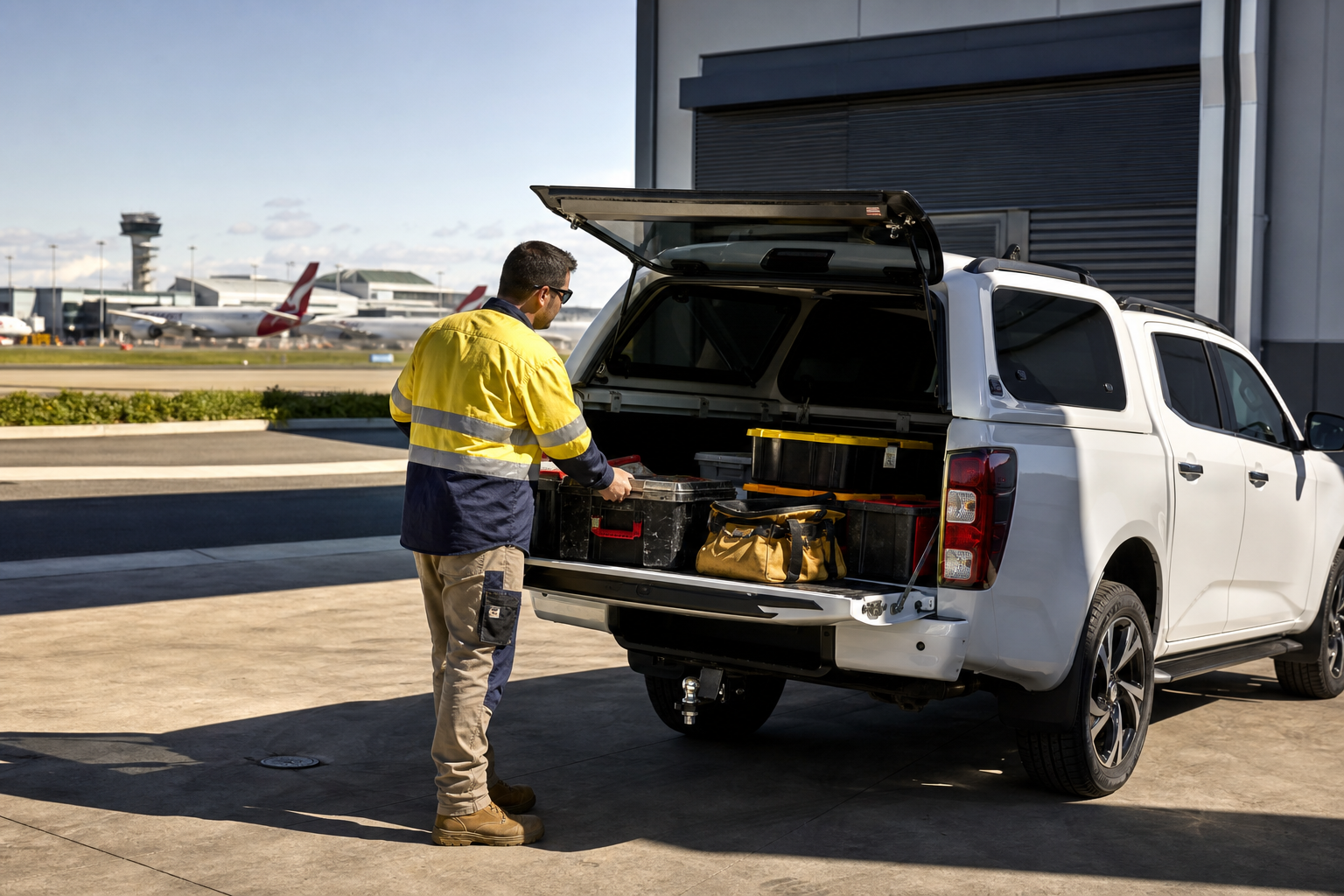
2.1 Quick overview
Here’s how the main Mascot small business vehicle loan options line up.
| Option | Typical Use | Ownership at start | Balloon / residual? | Common term |
|---|---|---|---|---|
| Chattel mortgage | Utes, vans, service vehicles | You (from day one) | Optional balloon | 3–5 years |
| Commercial hire purchase | Similar to chattel | Lender until final payment | Sometimes | 3–5 years |
| Finance lease | Businesses upgrading often | Lender | Yes – residual required | 3–5 years |
| Operating lease / rental | Short-term, off–balance sheet feel | Lender | No (just hand back/renew) | 2–4 years |
| Novated lease (via employer) | Owner-operators on payroll | Lender | Residual required | 3–5 years |
| Business overdraft / line of credit | Short-term, flexible | N/A | No fixed term | Ongoing |
Each has pros and cons for tax, cashflow and risk. The right choice depends on how you actually use your vehicles and what your next 3–5 years look like.
2.2 Chattel mortgage – the workhorse for tradie ute finance in Mascot
A chattel mortgage is often the default for Mascot tradie ute finance:
- You own the vehicle from day one.
- The lender takes security over the vehicle (and sometimes personal guarantees).
- You can usually claim GST upfront (if registered) and interest/depreciation for business use.
Worked example – Mascot electrician buying a ute
- Vehicle price (incl. GST): $65,000.
- Business use: 90%.
- Term: 5 years.
- Interest rate: 8% p.a. (illustrative only).
Approximate monthly repayments with no balloon: ~$1,317.
If we add a 30% balloon ($19,500 due at end):
- Financed amount over term: $45,500.
- Approximate monthly repayment: ~$1,058.
You’ve just freed up ~$259/month in cashflow, but you’ll owe $19,500 at the end. That’s fine if you plan ahead (trade in, refinance, or budget a sinking fund).
2.3 Finance lease and operating lease – better for frequent upgraders
With a finance lease:
- The lender owns the vehicle.
- You pay a fixed rental and must have a residual at the end (ATO has guidance on minimum residuals relative to term).
- Lease rentals are generally deductible where the vehicle is used to earn income.
An operating lease (or rental) usually:
- Bundles rego, servicing and tyres.
- Lets you hand the vehicle back at term end without a residual risk.
- Costs more per month but smooths surprises.
For Mascot businesses with small fleets supporting the airport (couriers, catering vans, shuttle buses), operating leases can be useful when uptime and predictability are more important than squeezing out every tax benefit.
2.4 Novated lease vs chattel mortgage in Mascot
A novated lease is a three-way agreement between you, your employer (or your own company) and a leasing company:
- The vehicle is packaged through your pre-tax salary.
- You pay a combination of pre-tax and after-tax contributions to cover lease, running costs and FBT.
Novated lease vs chattel mortgage in Mascot often comes up when you’re a tradie on PAYG for a big contractor but running some side work.
| Feature | Novated lease (Mascot) | Chattel mortgage (business) |
|---|---|---|
| Who can use it? | Employees (incl. director employees) | ABN holders with sufficient income |
| Ownership | Lender during term | You from day one |
| Tax treatment | Salary packaging, FBT rules apply | Interest + depreciation (business use only) |
| Cashflow feel | Regular deductions from payslip | Monthly repayments from business cashflow |
| Flexibility if job changes | Can be transferred or unwound | Loan continues; business must pay |
| Best fit | Employees wanting personal + work mix | Genuine small businesses needing work vehicles |
If you run a true small business (not just as an employee), a chattel mortgage or lease in the business name usually lines up better with how you earn income, especially when paired with good record-keeping and logbooks.
For a deeper dive on structure choices (personal vs business), see /insights/buying-car-personal-vs-business-name-guide.
2.5 When (and when not) to use overdrafts or lines of credit
Some Mascot businesses fund vehicles from an overdraft or unsecured line of credit. It can work if:
- The vehicle cost is small (e.g. second-hand $25k van).
- You plan to repay aggressively within 1–2 years.
- The facility also supports lumpy working capital needs.
But overdrafts are usually variable-rate and repayable on demand. Using them as long-term van finance for airport businesses often breaches the core rule from our broader small business content: don’t use short-term working capital for long-lived assets.
3. Van finance for airport businesses: specific Mascot issues

3.1 Who this section is for
This will resonate if you:
- Run a courier, freight or logistics business servicing the airport.
- Operate mobile catering, cleaning or ground services with vans or minibuses.
- Provide maintenance, HVAC or electrical services to airport tenancies.
3.2 Airport-linked revenue is lumpy
Demand around Kingsford Smith can swing sharply with:
- Airline route changes.
- Security or regulatory changes.
- Economic cycles.
That means your van finance needs to be stress-tested.
A simple rule, consistent with our cash buffer guidance (see /insights/mascot-business-owners-mortgage-buffers-guide):
Aim to hold at least 1–2 months of vehicle repayments in your business buffer before committing to a new loan.
3.3 Worked example – van finance for an airport shuttle operator
- Two new 12-seater vans @ $75,000 each = $150,000.
- 5-year chattel mortgage, 8.5% p.a. (indicative).
- No balloon.
Approximate total monthly repayment: ~$3,077.
If your average monthly EBITDA (earnings before interest, tax, depreciation, amortisation) is $15,000, then vehicle repayments are around 20% of EBITDA.
That might be acceptable, but you’d want to check:
- What happens if flight volumes drop 25% for six months?
- Do you have cash or an overdraft to ride it out without raiding your home loan redraw?
Using redraw or offset as recurring working capital is a pattern we’ve warned against repeatedly (see /insights/smart-buffers-cashflow-rules-lumpy-income-alexandria-mortgage). The same logic applies here: keep van finance in dedicated business facilities, not buried in the home loan.
3.4 Seasonal and shift-based work
Airport work is often early-morning and late-night. Vehicles rack up high kilometres quickly. That argues for:
- Shorter terms (3–4 years) where possible.
- Considering operating leases or shorter chattel terms with a balloon so you’re not holding a 10-year-old van that still has finance against it.
The strategy continues below
You've seen the problem and the groundwork — now unlock the exact steps our CPA-certified brokers use, including 9 more sections. Enter your email for instant, free full access.
Free access. No spam — unsubscribe anytime. Your details stay confidential.
Frequently asked questions
Is a chattel mortgage or lease better for a Mascot tradie ute?▾
Should I buy my work vehicle in my personal name or the business?▾
Can I use my home loan to buy a ute or van for my business?▾
How does a balloon payment work on vehicle finance?▾
Will a vehicle loan affect how much I can borrow for a home?▾
Are novated leases a good idea for Mascot tradies?▾
How big should my cash buffer be before I take on vehicle finance?▾
Speak with a specialist advisor
Confidential consultation, bespoke advice for your situation.