Article
Solar for Granny Flats and Secondary Dwellings: Finance and Rent Uplift
A practical Australian guide to deciding if solar on a granny flat or secondary dwelling stacks up. Covers finance options, rent uplift, metering choices and quick numbers you can run this week.
Key Takeaway
Solar on a granny flat or secondary dwelling can pay off when the installed cost (often $4,000–$8,000 for 6–6.6 kW in 2026) is matched with higher rent, better tenant appeal and lower holding risk. The guide explains metering options, rent uplift ranges, and financing via equity top‑ups, construction loans or small business finance. It concludes with an action plan to run numbers, adjust leases and structure funding so landlords can act within a week.
Watch the short answer
Home loans when your wealth is in family trusts
Using trusts or companies This video explains how structures affect borrowing.
Read the transcript
If your wealth is tied up in family trusts and holding companies, a standard retail mortgage broker is going to slow you down. Complexity scares mainstream lenders. When your income flows through multiple entities, standard algorithms can't calculate your true servicing capacity. You need a team that speaks the language of complex corporate structures. We untangle your financials, working directly with your accountant to present your consolidated wealth to specialised credit managers who understand business logic. Don't let your smart tax structures ruin your lending potential. DM me the word 'STRUCTURE' for an expert review.
General information only, not personal advice. Your situation is assessed before any recommendation.
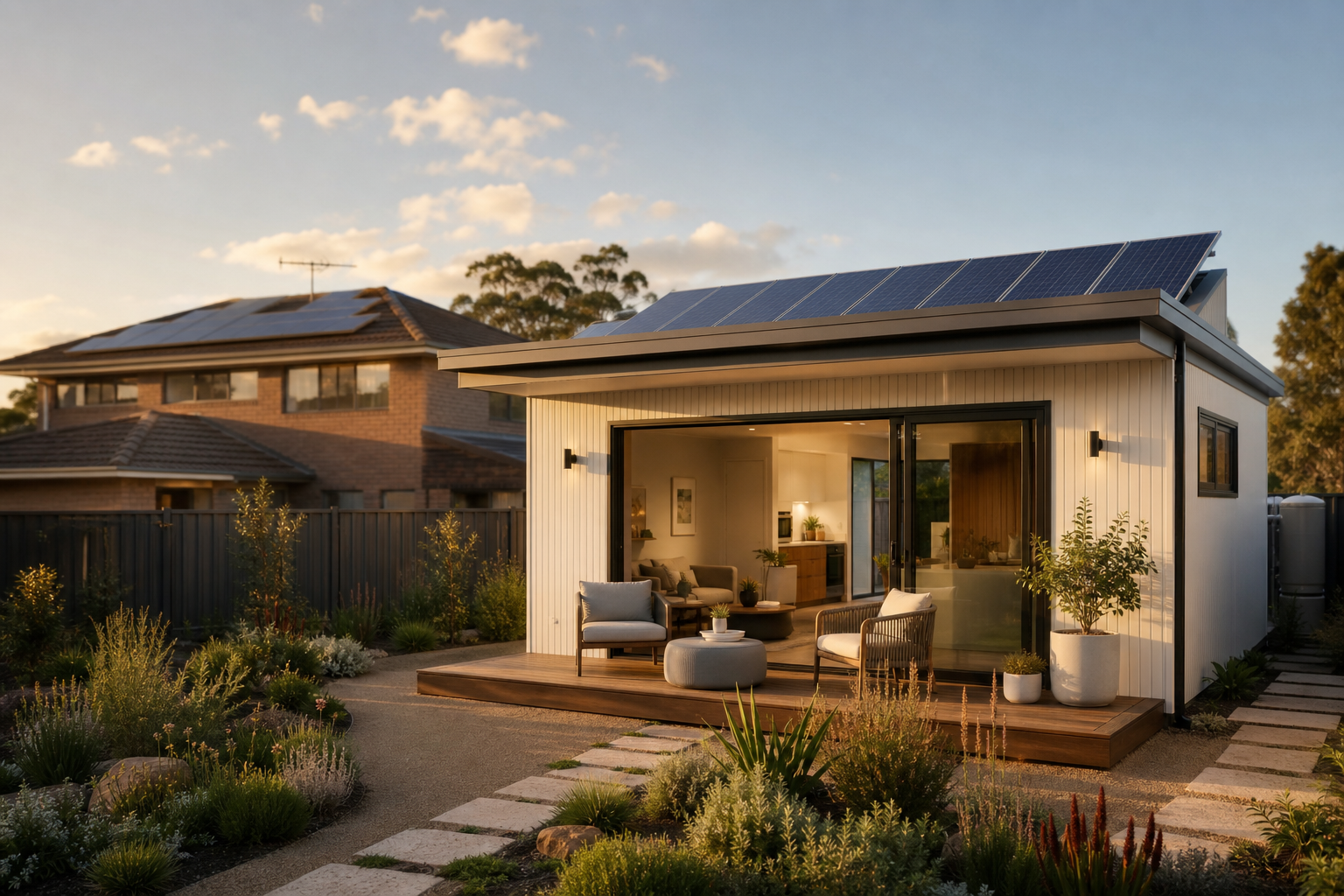
Investors are waking up to a simple idea: if your granny flat or secondary dwelling is tenanted, solar can turn a plain backyard unit into a premium, cheaper‑to‑run home.
In practice, solar on a granny flat lifts rent and reduces vacancy only when the finance, metering and lease are set up with intent. This guide steps through how to run the numbers, choose a metering model, structure the loan and decide whether solar makes sense for your secondary dwelling this week.
1. How solar changes the economics of granny flats
A granny flat or secondary dwelling with solar can be more than a feel‑good upgrade. Done right, it changes three key numbers:
- What tenants are willing to pay in rent.
- How often the property sits vacant.
- Your net annual cashflow after bills, interest and tax.
For a typical 6–6.6 kW solar system in 2026 costing around $4,000–$8,000 after STCs (Small‑scale Technology Certificates) [source: /insights/solar-system-costs-quotes-budgeting-before-you-borrow], you’re aiming to recover the outlay within 5–8 years via some mix of:
- Higher rent (or ‘bills included’ package rent).
- Lower power bills if you pay utilities.
- Lower vacancy and better tenant quality.
Quick rule‑of‑thumb payback
As a starting yardstick:
- Annual rent uplift target: 8–15% of total solar cost.
- Simple payback window: 6–10 years for most metro markets.
If a system costs $6,000 installed, you’re looking for at least $500–$900 per year of combined benefit (extra rent, saved bills, lower vacancy) to make the decision comfortably defensible.
For deeper system cost detail and how to build a realistic budget before you borrow, see What Solar System Really Costs You – And How Much To Borrow.
2. Metering and billing models: who gets the benefit?
The biggest decision with solar on a granny flat isn’t the panels. It’s how the electricity flows and who gets paid.
2.1 Common configurations for secondary dwellings
Most landlords end up with one of four models:
-
Separate meter, tenant pays power directly
- Granny flat has its own NMI and retailer account.
- Tenant gets bill savings from daytime usage.
- You capture value via higher rent and lower vacancy, not direct bill savings.
-
Embedded or sub‑meter, landlord on‑charges power
- Main house has primary meter; granny flat has sub‑meter.
- You receive one power bill, then invoice the tenant for usage (and possibly a solar charge).
- More admin and compliance; check state rules on on‑charging and maximum mark‑ups.
-
Bills‑included rent
- You keep the main account; tenant pays a higher all‑inclusive rent.
- Solar lowers your electricity cost, increasing your margin.
- Works best with careful caps/assumptions and tenants with stable usage.
-
Shared system across house + granny flat
- One array sized to both roofs, feeding a common meter.
- Benefit is split indirectly via rent for the flat and lower bills for the main house.
2.2 Metering choice vs rent strategy
Different metering choices match different rent strategies:
- Premium, separate‑meter tenancy: Charge modestly higher rent because tenants love lower bills and clear control over their account.
- Value‑add “bills included”: Charge more rent for simplicity, but you carry usage risk.
- Family or staff accommodation: Shared meter with informal cost‑sharing can be fine if everyone is aligned.
If you want to charge more for ‘bills included’ after adding solar, pair this guide with our deeper pricing tactics in Can You Charge Tenants More for ‘Bills Included’ When You Install Solar? (cluster sibling).
The strategy continues below
You've seen the problem and the groundwork — now unlock the exact steps our CPA-certified brokers use, including 9 more sections. Enter your email for instant, free full access.
Free access. No spam — unsubscribe anytime. Your details stay confidential.
Frequently asked questions
Is solar on a granny flat worth it for investors?▾
Can I claim tax deductions for solar on my granny flat?▾
Should my granny flat have a separate electricity meter for solar?▾
Can I charge higher rent for a granny flat with solar panels?▾
Should I include solar in my granny flat construction contract or add it later?▾
Does solar increase the value of a property with a secondary dwelling?▾
Speak with a specialist advisor
Confidential consultation, bespoke advice for your situation.