Article
What Solar System Really Costs You – And How Much To Borrow
A plain‑English 2026 guide to solar system and battery costs in Australia, how to read quotes properly, and how to budget before you borrow or refinance.
Key Takeaway
This article explains what solar and battery systems typically cost in Australia in 2026 and how to budget before borrowing to pay for them. It outlines indicative price ranges (around $4,000–$8,000 for a 6.6 kW system and $8,000–$16,000 for a 10–13 kWh battery), key drivers of cost, and how to model repayments versus bill savings. It concludes with practical steps to compare quotes, stress‑test cashflow, and align any borrowing term with system life.
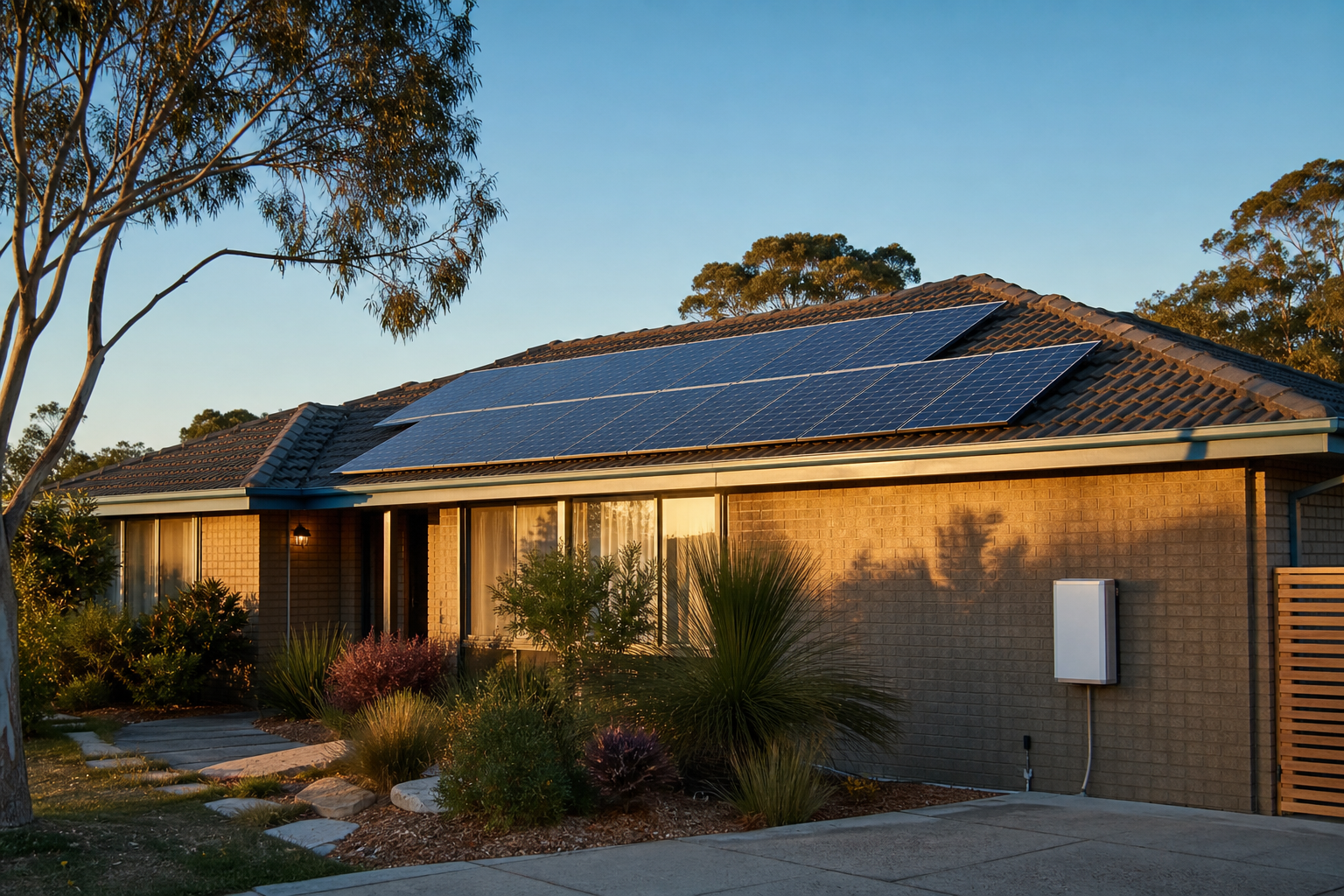
Solar power can absolutely cut your electricity bills – but the system price, batteries, and the wrong loan structure can quietly erase a lot of that benefit.
This guide walks through what solar and batteries typically cost in Australia in 2026, what drives those costs, and how to budget before you borrow or refinance. By the end, you’ll know how much solar you can reasonably afford, what a fair quote looks like, and how to line it up with your household or business cashflow.
Quick answer: In 2026, a quality rooftop solar system for a typical Australian home usually costs around $4,000–$8,000 for ~6.6 kW and $6,000–$11,000 for 8–10 kW after STC incentives. Adding a 10–13 kWh battery typically adds $8,000–$16,000 installed. Before you borrow, you should:
- Get at least three comparable quotes.
- Map repayments (at realistic mortgage or personal loan rates) against bill savings.
- Keep the loan term close to the system’s useful life.
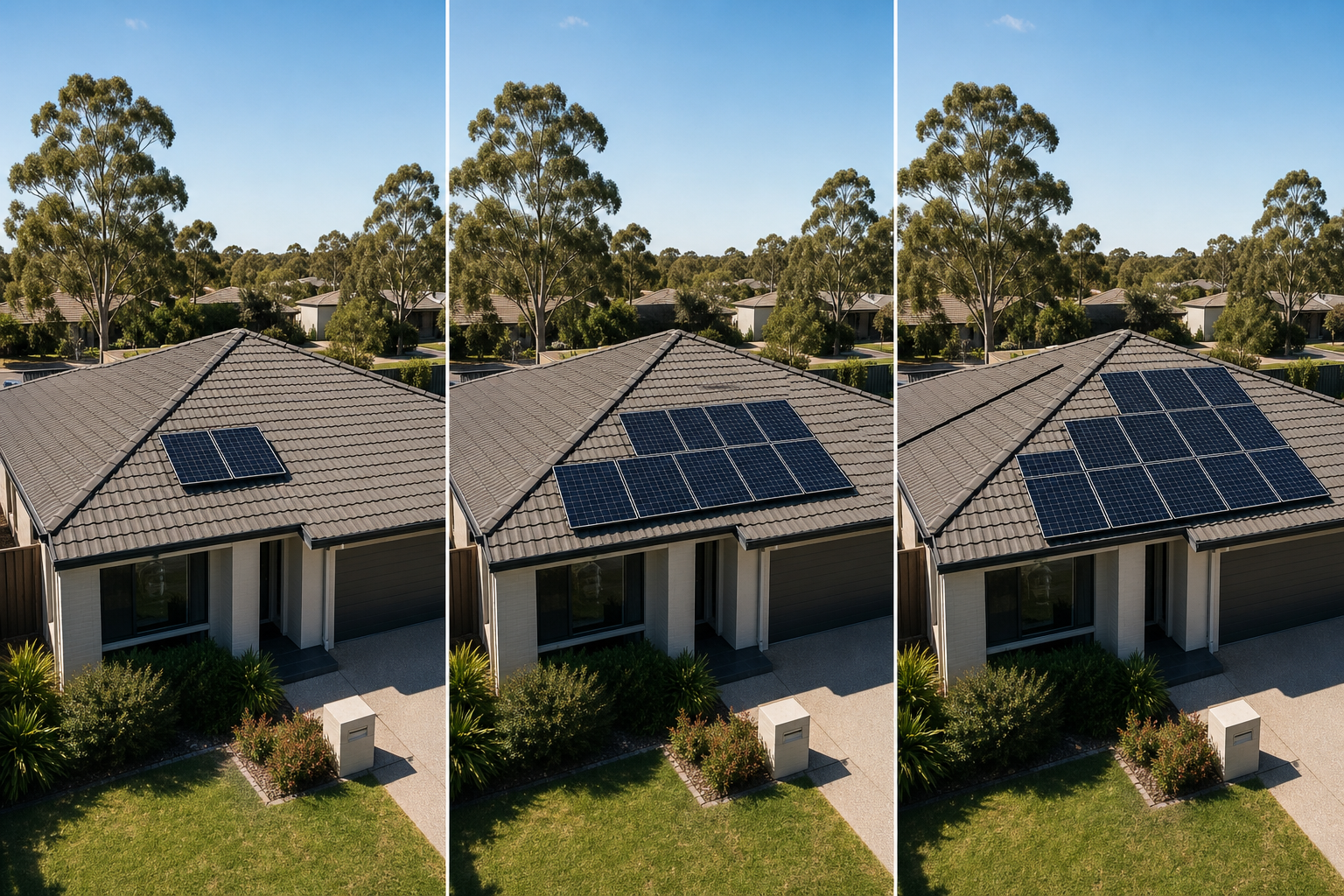
Typical 2026 cost ranges for common Australian residential solar system sizes.
1. What a solar system really costs in Australia in 2026
1.1 Typical price ranges (panels only)
Indicative post‑rebate costs for common residential systems in 2026 (good‑quality gear, not the cheapest on the internet):
| System size (kW) | Typical roof type | Indicative post‑STC cost* |
|---|---|---|
| 3–4 kW | Small homes / units | $3,000 – $5,000 |
| 6–6.6 kW | Average suburban home | $4,000 – $8,000 |
| 8–10 kW | Larger homes, EV charging | $6,000 – $11,000 |
| 15–20 kW | Small business rooftop | $12,000 – $25,000+ |
*STC = Small‑scale Technology Certificates. These are effectively an upfront discount based on expected generation. Actual prices vary by state, installer and component brands.
Very cheap deals outside these bands are often cutting corners: lower‑quality panels or inverters, minimal warranties, rushed installs, or aggressive finance attached.
1.2 Battery price guide
In 2026, home batteries are still the expensive part of the equation. Broadly:
| Battery usable capacity | Typical use case | Indicative installed cost* |
|---|---|---|
| 6–8 kWh | Small/average home, partial backup | $6,000 – $10,000 |
| 10–13 kWh | Average family home, evening load | $8,000 – $16,000 |
| 13–20 kWh+ | Large homes, high usage / EVs | $13,000 – $25,000+ |
*Includes battery, hybrid inverter or additional inverter hardware, wiring, and typical installation.
Batteries can make sense, but their payback is usually longer than panels alone unless you:
- Have high evening usage
- Are on a time‑of‑use tariff with big peak charges
- Want backup for frequent outages
1.3 Commercial / small business systems
For small businesses, price per kW can be similar or slightly lower than residential for larger systems, but:
- Structural assessments, switchboard upgrades and access machinery can add thousands.
- Finance structures are more varied (chattel mortgage, lease, PPA, green loans).
A typical small‑to‑medium business might look at:
- 10–30 kW roof system: roughly $12,000–$40,000
- 30–100 kW: $40,000–$140,000+, with more engineering and grid approvals
If you’re weighing equipment or fit‑out finance for solar alongside other assets, it’s worth understanding how lenders look at business assets generally – see our guide on how business equipment finance works in Australia.
2. Why quotes vary so much – and what actually drives cost
Not all 6.6 kW systems are equal. Five main drivers explain most price differences.
2.1 Panel and inverter quality
- Tier‑1 panels vs generic brands: Better‑known brands cost more but usually offer more stable output and longer product warranties (20–25 years vs 10–12 years).
- Inverter type and brand: A high‑quality string inverter or reputable microinverter system will cost more upfront but is the heart of the system.
A “cheap” 6.6 kW quote might be $4,000; a high‑end equivalent might be $7,000–$8,000. Over 20 years, that extra $3,000–$4,000 can easily be worth it in output and lower failure risk, especially if you’re borrowing over time.
2.2 Roof complexity and site costs
Expect higher costs if:
- Your roof is steep, high, multi‑storey, or has limited access
- Switchboard or meter upgrades are required
- There’s asbestos, old wiring or structural work
A simple single‑storey tin‑roof install can be $1,000–$2,000 cheaper than a complex, multi‑storey tile roof with switchboard works.
2.3 Size of system
There are economies of scale. The jump in cost from 3 kW to 6.6 kW is not double – the scaffolding, labour and much of the wiring are already there. Often, you’re paying mostly for extra panels.
If your roof and meter can handle it, stretching to a slightly larger system can improve value per kW, provided your usage or future EV plans justify it.
2.4 Warranties, after‑sales and installer quality
Good installers price in:
- Design time
- Quality mounting hardware
- Commissioning and monitoring setup
- Future call‑backs and service
You’re paying partly for who will pick up the phone if something fails in year 8.
2.5 Finance and sales channel
This is where busy people often get stung.
- “Interest‑free” deals often hide merchant fees of 15–25% baked into the system price.
- High‑pressure sales (“sign tonight and we’ll throw in a battery”) usually mean a margin is hiding somewhere.
Always ask for a cash‑price quote without bundled finance. If they can’t or won’t give it to you, treat that as a red flag.
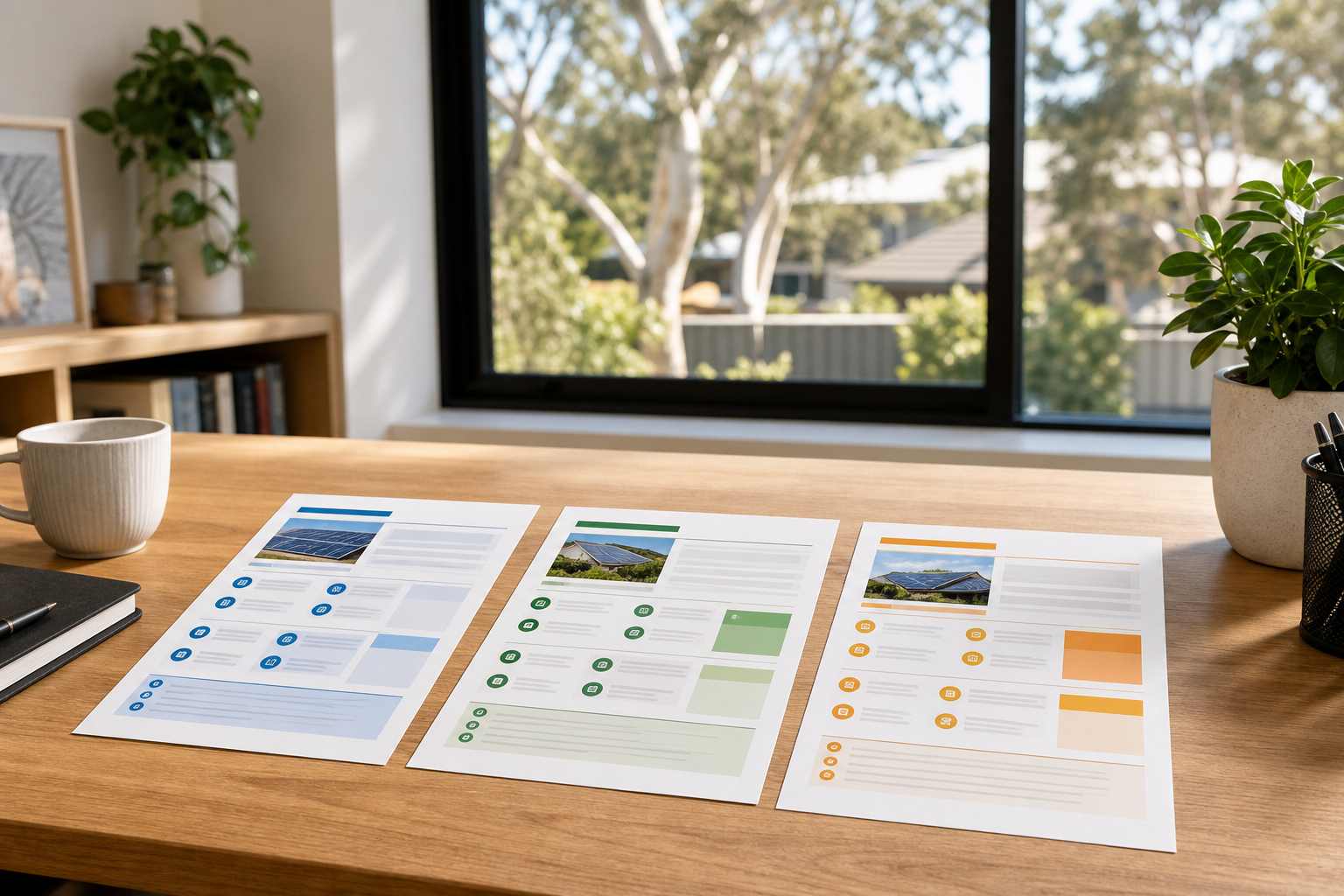
Comparing quotes on components, warranties and realistic output matters more than sticker price alone.
3. How to read a solar quote properly
A decision‑grade quote should be clear enough that you could hand it to a second installer and they’d know exactly what’s being supplied.
3.1 Essentials your quote should include
Check for:
- Panel brand and model, total kW
- Inverter brand and model (or microinverter brand per panel)
- Mounting system brand
- Layout or design summary (roof orientation, number of panels per string)
- Estimated annual generation (kWh) and assumptions used
- All site costs: switchboard upgrade, meter changes, cabling runs, scaffolding
- Grid connection fees or charges
- Warranties: product, performance, and installation
- Finance terms – interest rate, fees, payment term, who the lender is (if finance is included)
If any of these are missing, ask for them in writing before signing.
3.2 Comparing quotes fairly
When you’ve got 2–3 quotes, put them side‑by‑side on a few key metrics.
| Factor | Quote A | Quote B | Quote C |
|---|---|---|---|
| System size (kW) | 6.6 kW | 8.2 kW | 6.6 kW |
| Panels (brand/model) | Brand X 415 W | Brand Y 410 W | Brand Z 440 W |
| Inverter type | 5 kW string inverter | 6 kW string inverter | Microinverters |
| Estimated annual output | 9,500 kWh | 11,000 kWh | 9,200 kWh |
| Total price (post‑STC) | $5,200 | $6,800 | $7,900 |
| Price per kW | $788 | $829 | $1,197 |
| Product warranty (panels) | 15 years | 25 years | 25 years |
| Inverter warranty | 10 years | 10 years | 15 years |
| Installation warranty | 5 years | 10 years | 10 years |
Often the “cheapest” quote is also:
- Using less efficient panels
- Offering shorter warranties
- Estimating unrealistically high output
Look at price per kW, warranties, and expected output, not just the total.
3.3 Red flags in a quote
Be cautious if you see:
- Big promises like “$0 bills” without detailed modelling
- Vague brand descriptions (“premium panels” but no model number)
- No mention of roof or switchboard condition
- Finance that is only described as “interest‑free” or “$X per week” with no APR
If you’re also thinking of paying via your home loan, pair this quote review with our practical guide on using your home loan to pay for solar.
4. Budgeting: how much solar can you really afford?
4.1 Start with your power bills, not just the quote
Grab the last 12 months of electricity bills and note:
- Total kWh used per year
- Peak vs off‑peak usage (if on time‑of‑use)
- Total annual spend
For many households, a 6.6 kW system can offset 60–80% of daytime usage, depending on when you use power. Batteries can increase self‑consumption but at a higher cost.
4.2 Basic payback calculation (panels only)
Assume:
- 6.6 kW system in a capital city
- Generates ~9,500 kWh per year (reasonable assumption; check local data)
- You self‑consume 50% at 30c/kWh, export 50% at 8c/kWh
Annual bill reduction:
- Self‑consumed: 4,750 kWh × $0.30 = $1,425
- Exported: 4,750 kWh × $0.08 = $380
- Total benefit ≈ $1,800 per year
If the system costs $6,000 installed, simple payback is:
$6,000 ÷ $1,800 ≈ 3.3 years (before financing costs and maintenance).
4.3 Add borrowing costs to the picture
Now add financing. Say you:
- Borrow $6,000 at 7% interest (personal or green loan)
- Loan term: 5 years
Approximate monthly repayment: $119 (around $1,430 per year).
Compare to our earlier annual benefit of $1,800:
- Bill savings: $1,800
- Loan repayments: $1,430
- Net cashflow gain: ~$370 per year while the loan runs, then full benefit afterwards.
If instead you roll it into a 25‑year home loan at, say, 6.5%:
- Borrow $6,000 over 25 years at 6.5%
- Monthly repayment ≈ $40 (about $480 per year)
- Total interest over 25 years ≈ $6,000 – you effectively double the cost of the system.
So your bill savings may still be strong, but you’ve paid twice for the hardware over a long period. That can still be acceptable if cashflow is tight, but it should be a conscious decision. Our separate guide on using your home loan to pay for solar unpacks this in detail.
4.4 Stress‑testing your budget
Before signing a contract or loan, sanity‑check:
- 12‑month outlook – Are there upcoming changes (parental leave, business slowdown, rate hikes)?
- RBA and rate paths – In early 2026 the cash rate is around 4.35% after increases to control persistent inflation; lenders price risk above this. Assume your variable rate can rise.
- Buffer your repayments – Could you still cope if repayments were 1–1.5 percentage points higher? APRA expects banks to test at least a 3% buffer for mortgages; be at least that conservative yourself.
If the numbers only just work at today’s rates, be careful about committing to additional borrowing for solar.
4.5 When a smaller system is smarter
Down‑sizing the system can make sense if:
- Your daytime usage is low (everyone out during work hours)
- Roof space is limited or shaded
- You already have energy‑efficient appliances
In that case, a 3–4 kW system might comfortably trim bills without over‑capitalising or stretching your borrowing.
Match solar system size and finance structure to your real usage and cashflow.
5. Choosing how to pay: cash, solar finance, or your mortgage?
5.1 Paying cash
Best if you:
- Have solid emergency savings even after paying for solar
- Can still meet other near‑term goals (e.g. home deposit, renovations, tax bills)
Pros:
- No interest cost or loan application process
- Simpler paperwork
Cons:
- Ties up cash that might be needed elsewhere
5.2 Dedicated solar / green loans
These are usually unsecured or partially secured personal loans marketed specifically for solar.
Pros:
- Shorter terms (often 3–10 years), forcing you to pay it off within system life
- Fixed repayments give certainty
Cons:
- Interest rate can be higher than home loans
- Some are bundled with specific installers and higher system prices
Run the full cost of credit (total repayments minus amount borrowed) against your expected bill savings.
5.3 Rolling into your home loan
For homeowners with equity, this is tempting because:
- Interest rates are usually lower than personal loans
- Repayments spread over a longer term, so cashflow is easier
But the trade‑off is total interest cost if you don’t match the solar portion to a shorter term. Good structures include:
- A separate loan split for solar on a 5–10 year term, while your main mortgage sits on 25–30 years.
- Using an offset account: pay cash from savings but keep the option to redraw if truly needed.
Before refinancing or topping up, read our practical guides on the real cost of switching and rate competitiveness:
- What refinancing really costs: break fees, LMI and traps
- Spotting an uncompetitive home loan rate in 2026, fast
- Refinancing costs, risks and process: a practical Australian guide
These pieces help you avoid spending $3,000 in switch costs to save $1,500 of interest over the same period.
5.4 Business and investor considerations
For small businesses and property investors:
- Solar may be depreciable and potentially eligible for specific tax incentives depending on the year and budget rules.
- Cashflow is king – structure finance so repayments line up with energy savings and rent/turnover.
Given the 2026–27 Federal Budget’s focus on changing how investment income and capital gains are taxed, it’s more important than ever to align your tax, loan and asset decisions. Your accountant or a broker who is also a tax professional can help here.
6. One‑week action plan: from idea to decision
If you’re busy, here’s a realistic plan you can complete in a week.
Day 1–2: Clarify your goals and budget
- Pull your last year of electricity bills.
- Decide whether you want panels only or panels + battery.
- Set a rough budget range (e.g. $5k–$8k for panels, $10k–$20k with battery).
- Decide if you’re willing to borrow and at what maximum monthly repayment.
Day 3–4: Get and compare quotes
- Shortlist 3 reputable, local installers (CEC‑accredited installers are a good starting point).
- Request like‑for‑like quotes with clear panel and inverter models.
- Use the comparison table approach in Section 3.2 to line them up.
Day 5: Model savings vs repayments
- Ask each installer for conservative savings estimates based on your actual usage.
- Plug system cost into:
- A solar loan calculator; and/or
- Your home loan balance to see new repayments.
- Stress‑test with interest rates 1–1.5% higher than today.
Day 6: Decide how to pay
- If cash: check your emergency buffer and short‑term goals still feel safe.
- If loan: decide between solar/green loan, equipment finance (for business), or home‑loan‑based options.
- Aim to match or beat a 10‑year payoff for the solar component if possible.
Day 7: Sense‑check and commit (or pause)
- Re‑read contracts and finance terms.
- If anything feels rushed or confusing, pause – the sun will still be there next month.
- If it stacks up, book the install and diarise warranty and inspection details.
7. Common traps – and how to avoid them
7.1 Over‑borrowing on a long home loan
Rolling a $15,000 solar + battery package into a 30‑year mortgage at, say, 6.5% can mean paying over $18,000 in interest on top of the $15,000 principal if you keep the full term. That’s a $33,000+ real cost for equipment that might last 12–15 years.
Workaround: use a shorter split or make extra repayments specifically against the solar portion.
7.2 Chasing the biggest system without a plan
Buying the largest system the roof can take, without considering your actual usage or tariff structure, risks long payback times and unnecessary borrowing.
Check whether the extra kW’s output will be self‑consumed or mostly exported at a low feed‑in tariff.
7.3 Ignoring roof and electrical condition
If your roof needs repairs or a re‑sheet in 5 years, you may have to:
- Pay to remove and re‑install panels, and
- Wear extra downtime costs.
Better to coordinate roof and switchboard work before or with the solar install, even if that adds to the upfront cost.
7.4 Not checking how it affects future plans
If you expect to:
- Sell the property within 3–5 years
- Refinance to buy an investment or upgrade
- Help older parents tap equity later (see our guide on protecting older parents before they borrow against the family home)
…don’t let a poorly structured solar loan or top‑up push your loan‑to‑value ratio (LVR) over key thresholds that trigger lenders mortgage insurance (LMI) or limit options.
A well‑structured solar investment should make your property and cashflow more attractive to lenders, not less.
FAQs
How much does a typical solar system cost in Australia in 2026?
Most Australian homes will pay around $4,000–$8,000 for a good‑quality 6–6.6 kW solar system after STC incentives, depending on roof complexity and brands. Larger 8–10 kW systems are often $6,000–$11,000. Very cheap deals below these ranges usually involve lower‑quality components, limited warranties, or higher hidden financing costs.
Are solar batteries worth the extra cost?
A 10–13 kWh battery often costs $8,000–$16,000 installed and typically has a longer payback period than panels alone. Batteries can make sense if you have high evening usage, expensive peak tariffs, or need backup during outages. Always compare the extra borrowing and interest cost against realistic bill savings and your tolerance for a longer payback.
Is it better to use my mortgage or a solar loan to pay for solar?
Using your home loan often gives a lower interest rate but can dramatically increase the total cost if you stretch repayment over 25–30 years. A dedicated solar or green loan usually has higher rates but shorter terms, keeping total interest more contained. A good compromise is a separate home loan split for solar on a 5–10 year term, or using extra repayments to clear the solar portion quickly.
How do I know if a solar quote is fair?
Check that the quote clearly lists panel and inverter brands and models, total system size, expected annual generation, all site and grid connection costs, and full warranty details. Then compare at least three quotes on price per kW, component quality, warranties and installer reputation. Be wary of vague brands, unrealistic savings claims and finance pitched only as “$X per week” without an interest rate.
How big a solar system do I need?
The right system size depends on your annual electricity usage, when you use power, roof space, and future plans like EV charging. Many homes do well with 6–8 kW, which can offset a large chunk of daytime usage; low‑usage households might be fine with 3–4 kW. Start with your actual bills and have installers model a couple of sizes so you’re not over‑ or under‑sizing.
Should I wait for prices to fall before installing solar?
Panel prices have generally trended down over time, but policy changes, supply issues and currency moves can cause bumps. Meanwhile, higher energy prices and the RBA’s efforts to control inflation mean power bills are unlikely to fall meaningfully in the short term. If your payback at today’s prices is around 3–6 years and you plan to stay put, waiting purely for marginal price drops usually doesn’t improve your position.
Key takeaways
- In 2026, most Australian homes will pay $4,000–$8,000 for a quality 6–6.6 kW solar system and $8,000–$16,000 for a typical 10–13 kWh battery.
- Don’t just chase the cheapest quote – compare brands, warranties, design and realistic output on a like‑for‑like basis.
- Always model bill savings against loan repayments, and stress‑test for higher interest rates before you borrow.
- If using your home loan, consider a shorter solar split or extra repayments to avoid paying 20–30 years of interest on a 10–15 year asset.
- Take a one‑week structured approach: gather bills, get three quotes, run the numbers, then decide calmly rather than under sales pressure.
Before you sign anything, it’s worth running your numbers with someone who understands both the solar economics and your loan and tax position. At Local Knowledge Finance, you get your tax, your loan and your solar finance strategy looked at in one consultation – CPA, Tax Agent and Mortgage Broker in the same discussion. Book a free 15‑minute solar finance strategy call or try our borrowing power and repayment calculators at localknowledge.finance/tools to see what’s realistically affordable.
General advice only.
Frequently asked questions
How much does a typical solar system cost in Australia in 2026?▾
Are solar batteries worth the extra cost?▾
Is it better to use my mortgage or a solar loan to pay for solar?▾
How do I know if a solar quote is fair?▾
How big a solar system do I need for my home?▾
Should I wait for solar prices to fall before installing?▾
Speak with a specialist advisor
Confidential consultation, bespoke advice for your situation.