Article
Your State’s Solar And Battery Programs: Finance Decisions That Stack Up
A state-by-state breakdown of major solar and battery programs in Australia, and what they mean for your home loan, cashflow and tax strategy this year.
Key Takeaway
This guide explains how state-based solar and battery programs across Australia affect borrowing, cashflow, and tax, and why borrowers should still stress-test savings 20% below quotes and interest rates 3% above current levels. It outlines key schemes in NSW, VIC, QLD, SA, WA, TAS and ACT, plus how rebates and zero-interest loans interact with mortgages and small-business finance. Readers get a one-week checklist to decide whether to act now or delay installation based on their overall financial position.
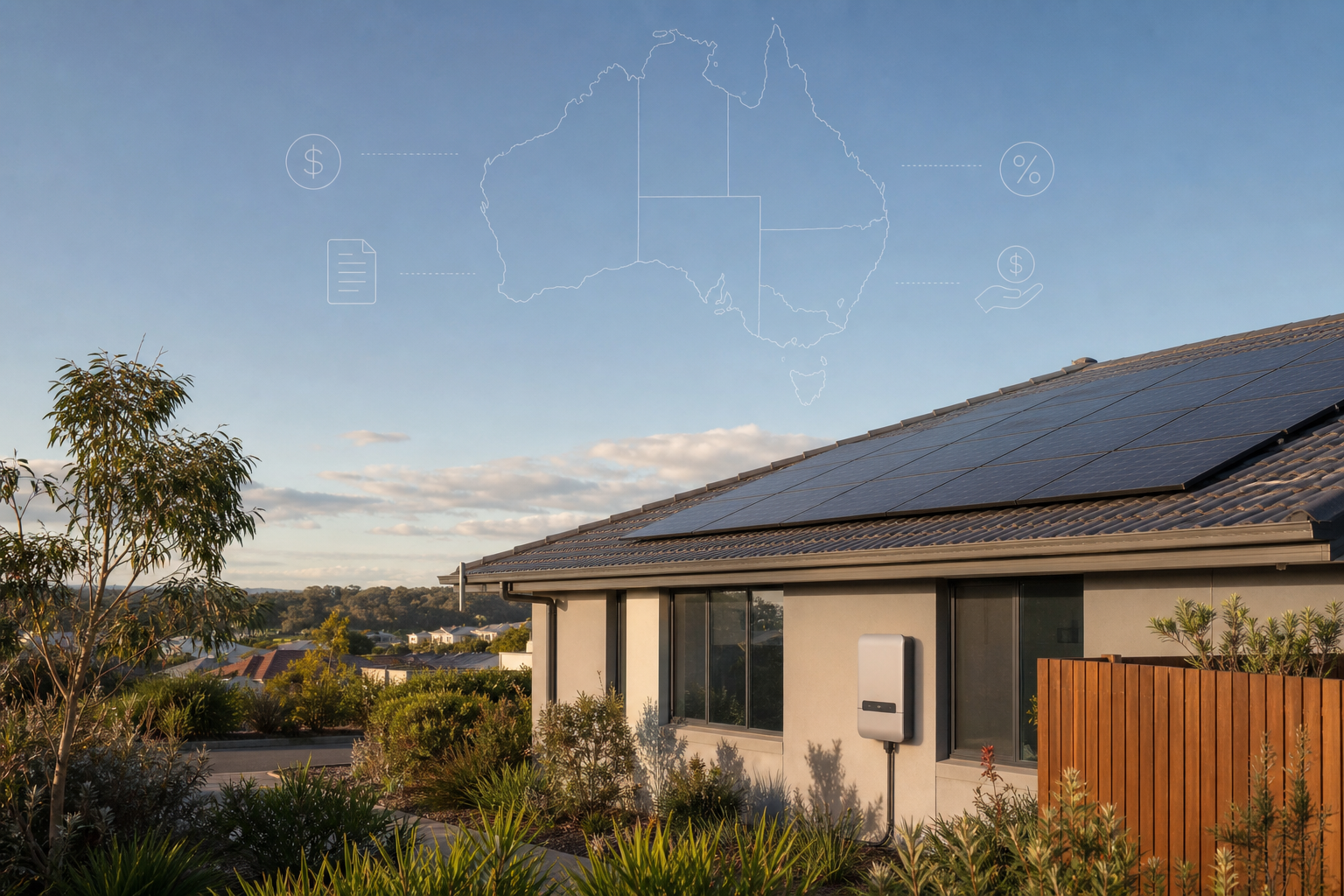
State-based solar and battery programs across Australia can cut the upfront cost of going solar, but they also change how you should structure your finance, manage cashflow and think about tax.
In practice, rebates and zero‑interest loans don’t remove risk – they shift it. You still need to stress‑test solar savings 20% below quoted estimates and loan repayments at interest rates 3% higher than today, as covered in our worked examples guide on modelling savings vs repayments.
1. How state solar and battery programs change your finance decisions
State and territory programs sit on top of the national Small‑scale Technology Certificate (STC) scheme and any feed‑in tariffs. That means most households and small businesses are stacking at least three different incentives and price signals when they decide whether to borrow.
From a finance point of view, state programs affect you in four main ways:
- Upfront cost – rebates and grants reduce the system price you need to fund.
- Loan structure – zero‑interest or low‑interest state loans compete with your home loan, green loan or installer finance.
- Eligibility and timing – means tests, postcode limits and application windows can force you to move faster – or wait.
- Tax and cashflow – for investors and businesses, incentives interact with depreciation, instant asset write‑off rules and cash buffers.
A good decision looks at the whole picture: incentives, system quality, finance terms, and your wider goals (paying down the home loan, investing, or shoring up business cashflow).
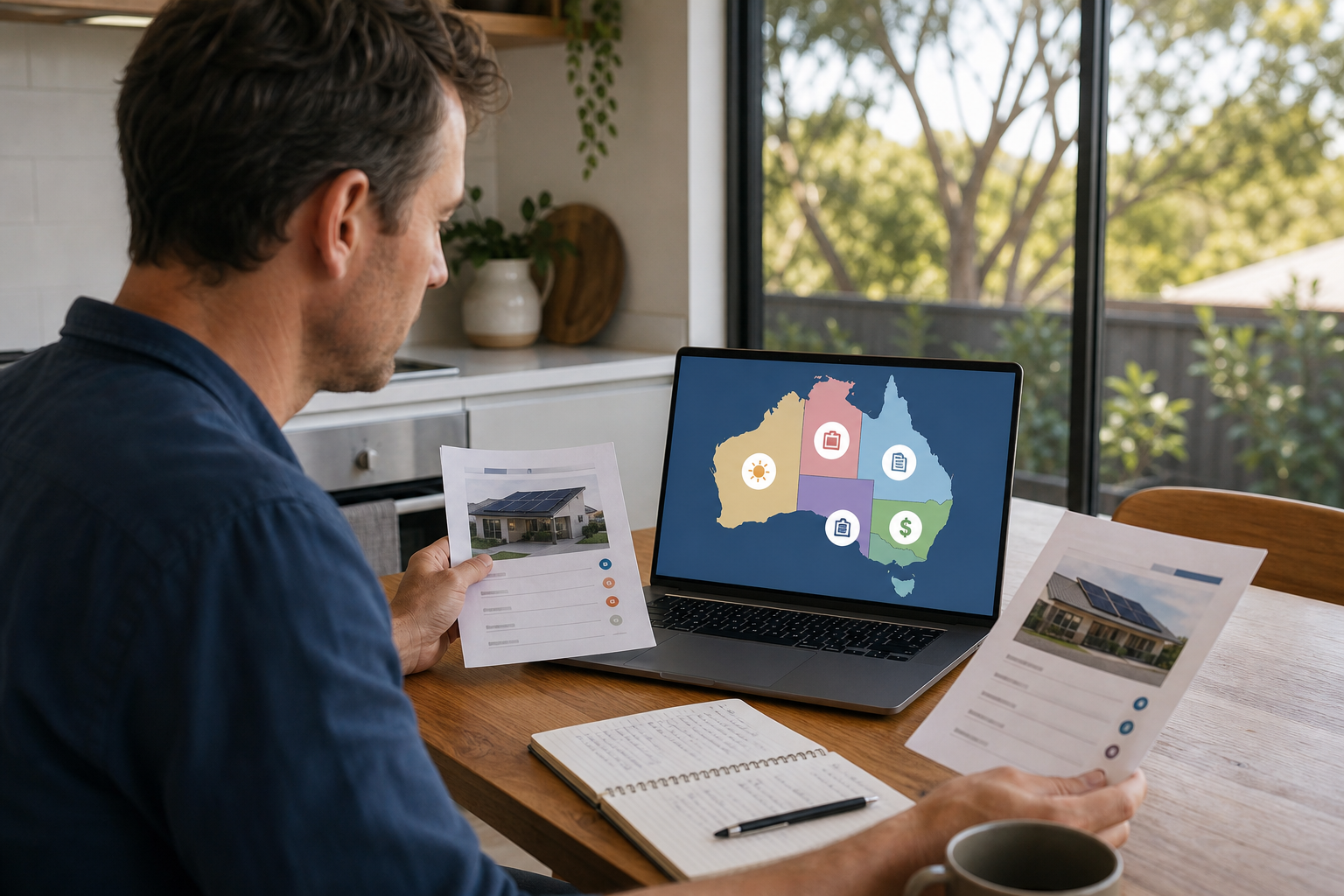
2. National context: why incentives matter more in a high‑stress environment
State schemes don’t operate in a vacuum. They’re landing at a time when:
- The RBA cash rate is in the mid‑4s and variable mortgage rates are much higher than a few years ago.
- Roy Morgan estimates around 32.5% of owner‑occupier borrowers are “At Risk” of mortgage stress, and 22% are “Extremely At Risk”.
- ABS living cost indexes show housing, interest and energy are big drivers of rising costs of living.
That makes solar and batteries attractive – but it also means any new debt has to be handled carefully.
Two principles to keep in mind (from our broader solar finance work):
- Treat solar debt like any other loan. Maintain at least a 6–12 month buffer covering living costs and all repayments, especially if you’re self‑employed or your income is variable.
- Keep solar and battery borrowing terms aligned with the useful life of the gear – usually 5–10 years for the debt, even if panels last longer.
For more on cashflow planning, see our guide on smoothing seasonal solar savings.
3. NSW: solar and battery finance signals to watch
NSW has tended to favour rebates and targeted support rather than a single, simple statewide loan program.
3.1 Typical NSW program shapes
Recent and current NSW initiatives often include:
- Means‑tested rebates for low‑income households to reduce upfront panel or battery cost.
- Targeted support for specific regions or housing types (e.g. social housing trials, virtual power plants).
- Occasional council‑ or network‑backed no‑interest loans or rates‑based repayment schemes in some LGAs.
The exact names and details change as budgets and governments change, so always check the NSW Government energy website for live settings.
3.2 Finance implications for NSW borrowers
-
Owner‑occupiers and refinancers
- If you qualify for a rebate, it can reduce the amount you need to add to your mortgage or green loan.
- But don’t automatically roll solar into a 25–30 year home loan. A cheaper‑rate, long‑term loan can cost more than a higher‑rate 7–10 year facility once you add up total interest.
- Consider a separate 5–10 year split on your home loan, dedicated to solar and batteries.
-
Self‑employed and investors
- Loan purpose, not the securing property, drives tax deductibility.
- If part of the system genuinely serves income‑producing use (home office, Airbnb area), you may be able to claim a portion of interest and depreciation – but you’ll need clear fractions and clean loan splits.
-
Small businesses
- Some NSW programs interface with business energy efficiency schemes. If you’re funding commercial solar, line this up with instant asset write‑off or depreciation settings and your business loan terms.
For any NSW borrower, compare state‑backed options to private finance and installer deals. Use the same like‑for‑like approach we walk through in our article on personal loans vs BNPL vs vendor finance.
The strategy continues below
You've seen the problem and the groundwork — now unlock the exact steps our CPA-certified brokers use, including 8 more sections. Enter your email for instant, free full access.
Free access. No spam — unsubscribe anytime. Your details stay confidential.
Frequently asked questions
Do state solar and battery programs really make solar free?▾
Is a state interest‑free solar loan better than using my home loan?▾
How do state solar schemes affect tax deductions for investors?▾
Can small businesses stack state solar programs with Federal tax incentives?▾
Should I wait for a better state solar rebate or buy now?▾
Are ‘interest‑free’ installer solar deals better than state programs?▾
Speak with a specialist advisor
Confidential consultation, bespoke advice for your situation.