Article
How Transport Upgrades Are Reshaping Eastern Suburbs Property Prices
Transport upgrades in Sydney’s Eastern Suburbs – trains, light rail and bus changes – are quietly reshaping which streets grow, which stagnate and how much banks will lend you. This guide shows how to read current and proposed projects so you can buy, refinance or invest with a clear, numbers‑based plan this week.
Key Takeaway
Transport upgrades in Sydney’s Eastern Suburbs increase property values and borrowing capacity where they cut reliable commute times and expand frequent services, but can reduce appeal on noisy or shadowed corridors. Evidence from Sydney light rail shows 5–15% value uplifts near well‑located stops, with banks favouring locations that improve serviceability. Buyers should map current and planned routes, weigh price premiums against cashflow, and stress‑test repayments at 2–3% above current rates before committing.
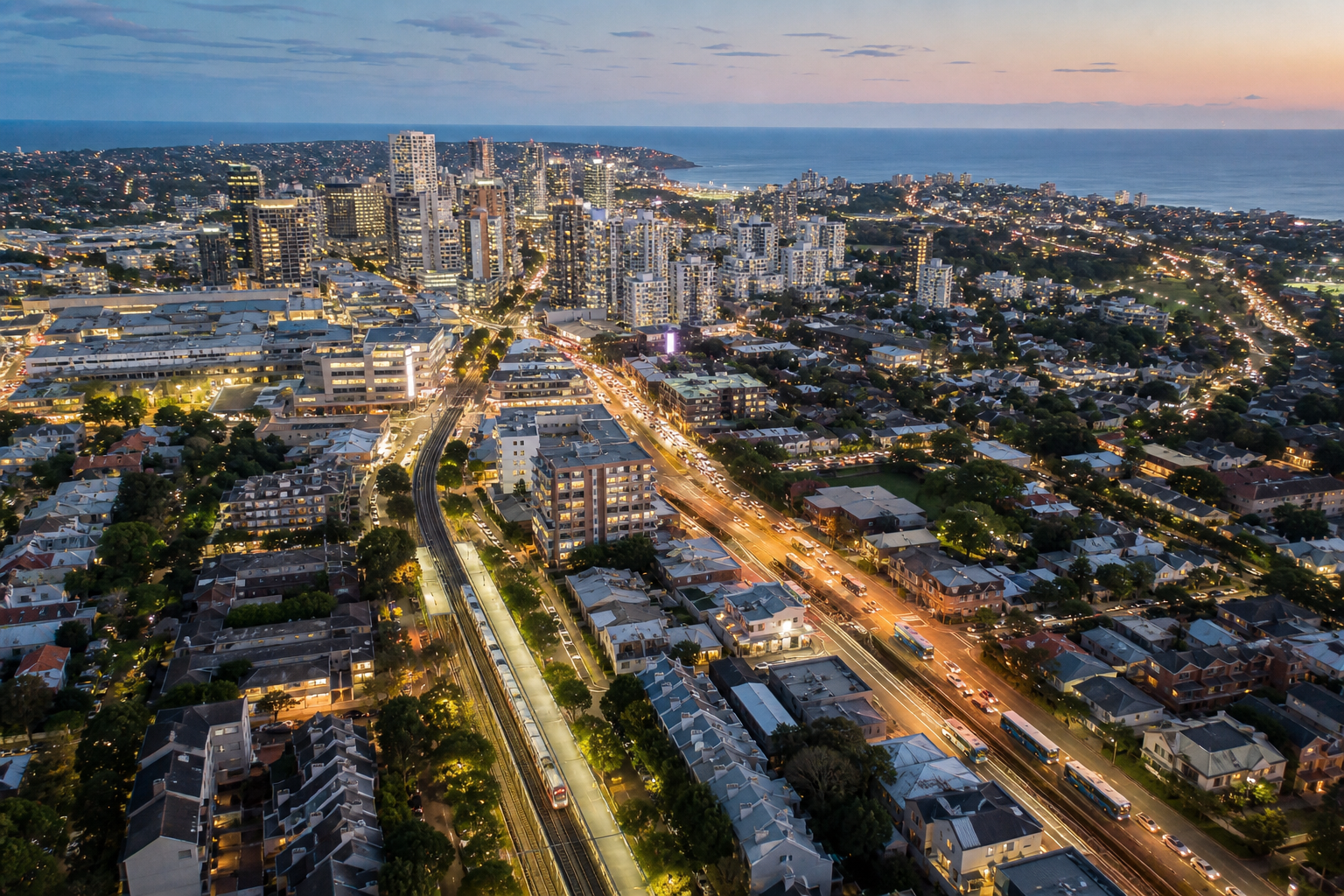
Public transport in Sydney’s Eastern Suburbs – trains, light rail and buses – is one of the quiet drivers of price gaps between very similar properties. When a corridor gets faster or more reliable services, values and rents near well‑located stops usually rise. But noise, shadowing and route changes can hurt particular streets.
This guide focuses on what you can do this week: how to read existing and proposed transport upgrades, how they flow into prices and rents, and how they affect what a bank is willing to lend you.
1. How transport upgrades really move prices and borrowing power
1.1 The simple rule: reliable, faster access usually wins
Across Sydney, three patterns are consistent:
- Shorter, more reliable CBD commutes support higher prices.
- Frequent, all‑day services support stronger rents and resale.
- Heavy noise, shadowing or traffic spill‑over can discount specific streets.
In the East, that means properties walking distance to:
- Train stations on the Bondi Junction line.
- Well‑located light rail stops (Randwick/Kingsford to CBD).
- High‑frequency bus corridors (Bondi Road, Anzac Parade, Oxford Street).
Banks implicitly acknowledge this. Suburbs with robust transport, diverse buyer pools and tight rental markets tend to get smoother valuations and are over‑represented in the “defensive” list in /insights/eastern-suburbs-postcodes-that-hold-value-best-when-prices-fall.
1.2 How transport changes flow into borrowing capacity
Transport doesn’t show up as a line item on your bank application, but it affects two things that do matter:
- Ongoing household costs. A couple spending $80 a week less on fuel, tolls and parking because they walk to the station has a lower cost base. Lenders benchmark against HEM, but lower real costs improve your safety margin.
- Income resilience. If you (or your tenants) can reliably get to CBD or major health/education hubs, it’s easier to avoid disruptions to work, which keeps income steadier.
For self‑employed borrowers and investors, that resilience feeds directly into how much risk you can safely take on – something we unpack from a lender’s perspective in /insights/over-hyped-vs-under-the-radar-eastern-suburbs-lender-view.
1.3 One‑week action checklist
This week you can:
- Map your target property against train, light rail and frequent bus services.
- Check how many minutes door‑to‑door to your likely workplace.
- Stress‑test your loan with a CPA‑style cashflow view, not just the bank calculator.
- If you already own, reassess whether a refinance to lower your rate and redirect freed‑up cash into buffers makes sense before the next RBA move.
2. Eastern Suburbs transport map: who really benefits?
2.1 The major corridors
In very broad terms, the East breaks into a few transport “bands”:
- Train spine – Bondi Junction and immediate surrounds (Waverley, parts of Woollahra and Edgecliff) with fast CBD access.
- Light rail band – Randwick, Kensington, Kingsford and surrounds.
- Anzac Parade bus corridor – Maroubra, Pagewood, Daceyville.
- Bondi / Bronte / Coogee bus feeders – beach suburbs feeding into Bondi Junction or the CBD by bus.
Each has a different mix of price premium, volatility and borrowing power impact, which should shape how you structure your loan.
2.2 Train vs light rail vs buses – what buyers actually pay for
Buyers and renters usually pay a premium for:
- Fast, frequent services in both peak and off‑peak.
- Simple, one‑change trips to the CBD or key job hubs.
- Walkable access – generally within 800m of a station/stop for most people.
Where services are patchy or indirect, households lean harder on cars and rideshare. That can mean more time, more cost and more stress – all things that matter when rates are higher and the RBA is keeping policy “restrictive” to tame inflation (see the RBA’s August 2026 Statement on Monetary Policy).
2.3 How investors should read the map
Investors looking at the East should overlay transport with rental demand and future supply. The higher‑yield, investor‑heavy pockets mapped in /insights/investor-focused-pockets-sydneys-east-yields-risk-loan-tactics often cluster along accessible corridors – but they can also be the first to wobble when borrowing costs rise.
As an investor, aim for:
- Robust tenant pools – students, hospital staff, CBD workers.
- Diverse demand drivers – not just one employer or one uni.
- Balanced yield vs volatility – transport helps resilience, but it doesn’t fully protect stretched, highly leveraged borrowers when rates jump.
3. Light rail and Eastern Suburbs prices: what we’ve learned so far
3.1 The impact of the CBD–South East Light Rail
The CBD–South East Light Rail has already reshaped parts of Randwick, Kensington and Kingsford. While local numbers vary by street, the general pattern seen in Australian and overseas studies is:
- 5–15% uplift for well‑located, walkable properties near stops over the medium term.
- Smaller or no uplift where:
- Stops are poorly integrated.
- Lines run down already congested roads without clear time savings.
- Noise and visual impact offset some of the benefit.
In the East, that means a well‑maintained 2‑bedder within a short, flat walk to a light rail stop – but not fronting a major intersection – often ends up on more buyer shortlists than a similar place a long, hilly walk away.
3.2 Winners and losers along the corridor
Likely winners:
- Side streets within 400–700m of stops, especially where walking is safe and relatively flat.
- Properties that appeal to students, hospital workers and CBD commuters.
- Small businesses that benefit from increased foot traffic.
Possible losers:
- Properties directly fronting busy sections of the line with noise, vibration or limited parking.
- Shops whose access or parking has been permanently constrained.
For investors and small businesses, that nuance really matters. Two shops 80 metres apart can see very different trade and valuation shifts depending on whether passengers naturally pass their frontage.
3.3 Worked example: light rail proximity and borrowing risk
Imagine two couples each buying a $1.4m apartment with 20% deposit ($280,000) and a $1.12m loan over 30 years.
- Assumed interest rate: 6.0% p.a. (illustrative only)
- Indicative P&I repayment: about $6,720 per month.
Couple A buys 300m from a light rail stop with safe, flat access. They can sell or rent quickly if needed.
Couple B buys on a bus‑reliant street with irregular services and steep hills.
Under APRA’s 3% serviceability buffer, the bank tests both at ~9% interest, around $9,000/month. On paper, both pass.
But in practice:
- Couple A has more options – they can downsize, rent out, or rely on strong rental demand to cover more of their costs.
- Couple B may struggle to attract tenants at the same rent if the market softens.
From a CPA lens, Couple A has more exit options and lower real risk, even though the bank saw identical applications.
The strategy continues below
You've seen the problem and the groundwork — now unlock the exact steps our CPA-certified brokers use, including 8 more sections. Enter your email for instant, free full access.
Free access. No spam — unsubscribe anytime. Your details stay confidential.
Frequently asked questions
Does living near a train or light rail stop always increase property value?▾
Are bus-only suburbs in Sydney’s Eastern Suburbs a bad investment?▾
How do transport upgrades affect my borrowing capacity?▾
Should I pay more to be closer to transport or closer to the beach?▾
How close to a station or light rail stop is considered ‘close enough’ for value?▾
Speak with a specialist advisor
Confidential consultation, bespoke advice for your situation.