Article
How Banks Value One‑of‑a‑Kind Rose Bay Homes – And Protect You
One‑of‑a‑kind Rose Bay homes don’t fit neatly into bank valuation boxes. This guide shows how valuers price uniqueness, what can go wrong, and how to protect your borrowing, auction strategy and renovation plans this week.
Key Takeaway
Banks value unique Rose Bay homes by starting with recent comparable sales and then applying conservative adjustments for views, architecture and land, usually lending against the lower of purchase price or valuation. For prestige properties, even a 5–10% valuation gap can wipe out $300k–$600k of borrowing capacity. Buyers and owners should test valuation ranges early, choose lenders with flexible prestige policies, and structure buffers so a single low valuation doesn’t derail settlement or refinancing plans.
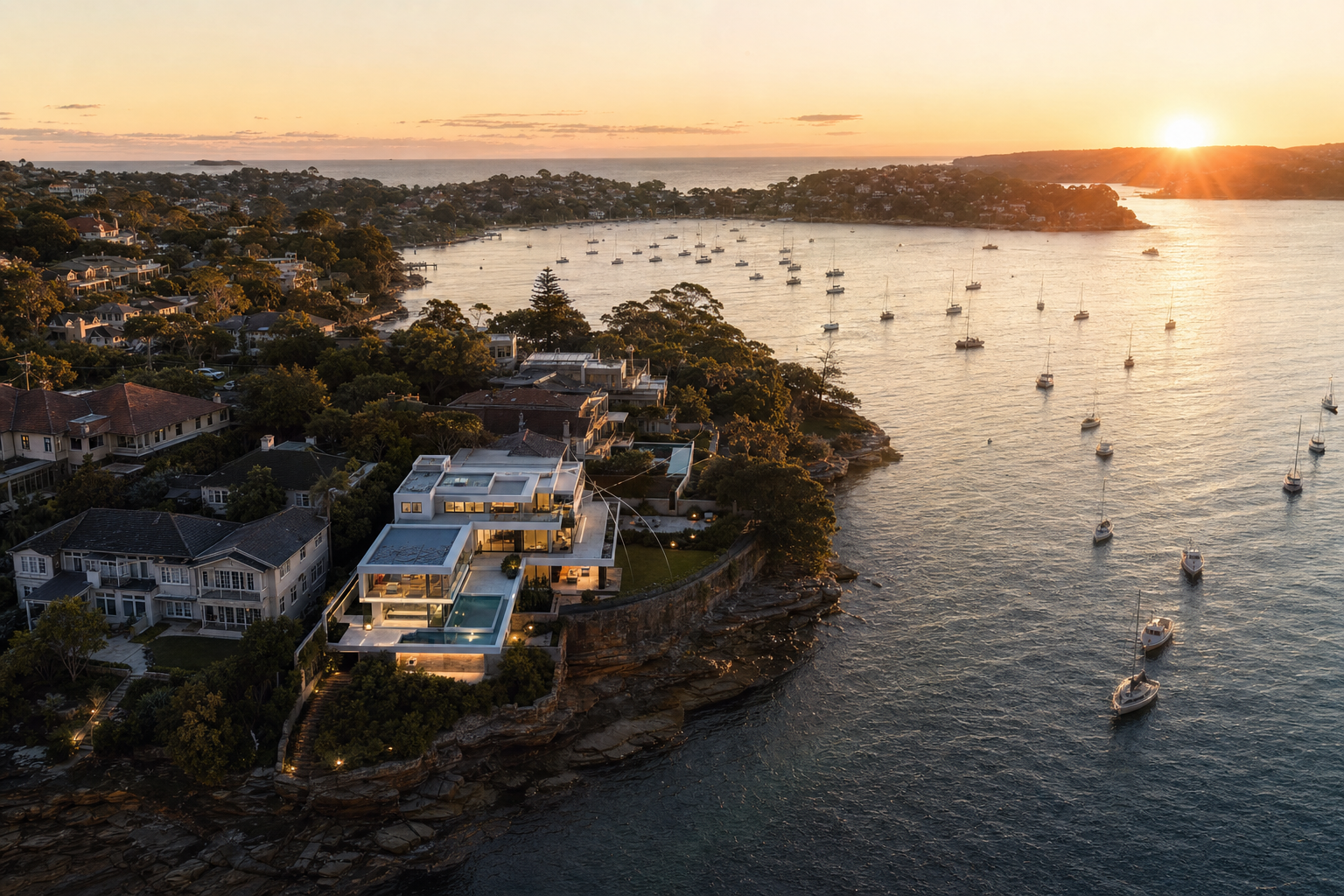
Buying or refinancing a one‑of‑a‑kind Rose Bay home is exciting – but bank valuations can quickly turn that excitement into pressure.
For unique and prestige homes, banks still rely on standard valuation rules: they lend against the lower of the purchase price or an independent valuation, using conservative assumptions and recent comparable sales. The more unusual the property, the harder it is to find comparables – and the more likely a cautious valuer is to come in under the number you, your agent or your architect believe the home is worth.
This guide explains how that plays out specifically for Rose Bay, and what you can do this week to reduce valuation risk before you bid, sign, or refinance.
1. Why unique Rose Bay homes are hard to value
1.1 What “one‑of‑a‑kind” really means to a bank
In Rose Bay, “unique” might mean:
- Architect‑designed rebuild on a steep site
- 270‑degree harbour views or rare Opera House sightlines
- Trophy homes on small streets with no recent comparable sales
- Houses with integrated boat storage or shared marina access
- Heritage elements, unusual layouts or mixed residential/commercial use
To a bank valuer, uniqueness is a double‑edged sword:
- It can support a premium price, but
- It makes it harder to prove that premium using hard data.
The valuer’s legal duty is to be defendable and conservative, not to validate the listing agent’s story. When in doubt, they usually shade value down, not up.
If you haven’t read it yet, it’s worth pairing this with our overview of how different property types are treated in the area: Decoding Rose Bay Property Types and Lending Rules This Year.
1.2 Typical price points and why 5–10% matters so much
In today’s market, it’s common to see:
- Well‑located family homes in Rose Bay trading between $4m–$7m
- Harbourside or view homes going well above that
On a $5.5m architect‑designed home:
- You agree to pay: $5.5m
- You plan for an 80% LVR loan: $4.4m
- Bank valuation comes in at $5.1m (7% under)
- Maximum 80% lend becomes: $4.08m
You now need an extra $320,000 in cash/equity or the deal doesn’t work.
On paper, it’s “only” 7%. In your real life, it can be the difference between settling and walking away.
1.3 Valuers are not trying to match your contract price
A common misconception in Rose Bay is that valuers simply confirm what you’ve paid. They don’t.
They are engaged by the lender to answer one question: “If we had to sell this property in a reasonable period, at arm’s length, what would it achieve?”
That means:
- They can – and often do – come in below contract
- They may ignore “outlier” sales agents are using as price anchors
- They tend to discount emotional premiums (e.g. architectural features you love)
Your goal is not to convince the valuer the home is special. It’s to make sure your finance plan still works if a conservative valuer takes a red pen to the number.
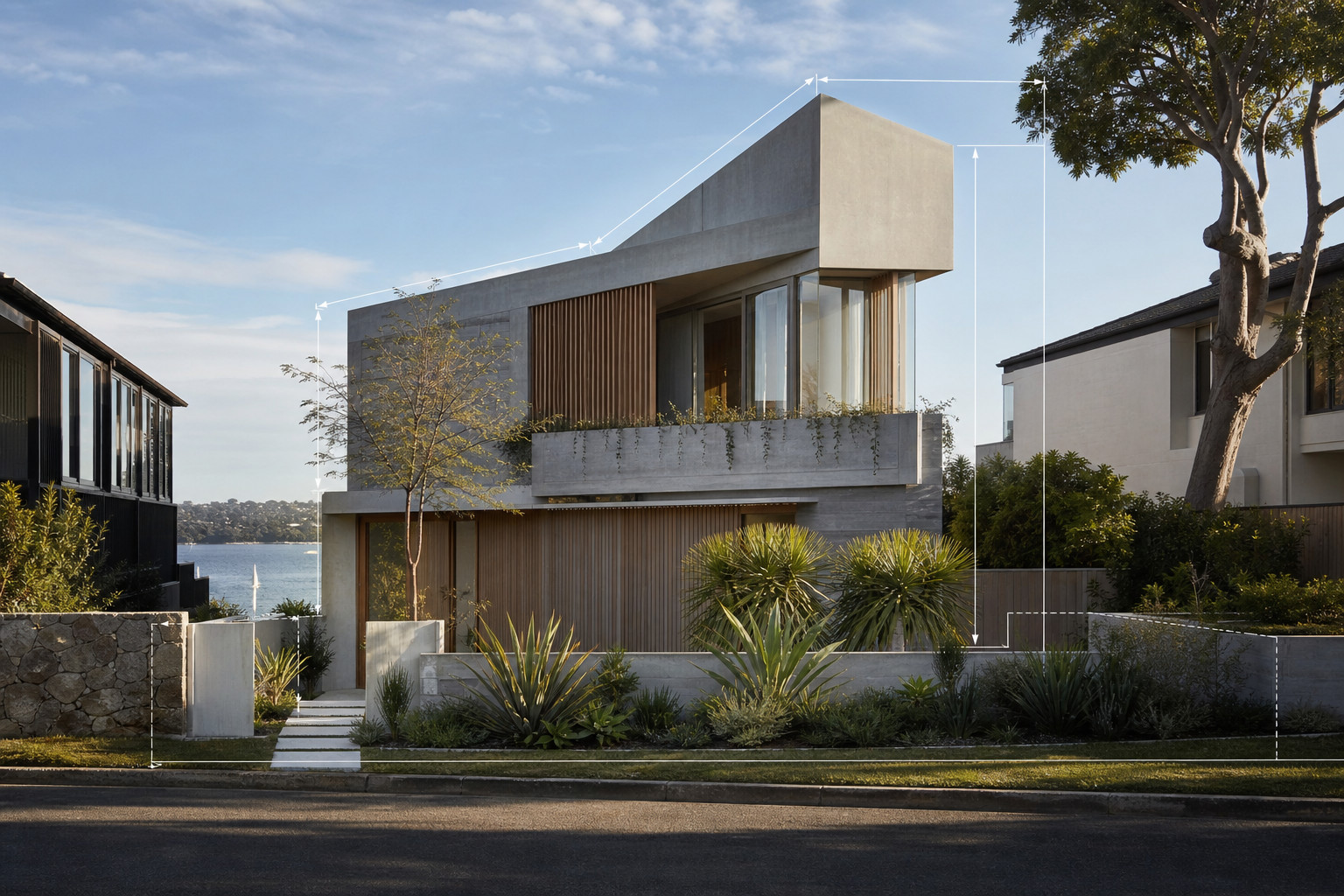
2. How bank valuers actually price unique properties
2.1 The comparable sales (comps) method – with twists
For most Rose Bay homes, valuers use a direct comparison method:
- Identify 3–6 recent sales as similar as possible (size, land, views, condition, location).
- Adjust each sale up or down for differences (e.g. extra bedroom, better view, inferior street).
- Cross‑check land value against published land values and other sales.
- Sense‑check the result against broader suburb medians and neighbouring pockets.
With truly unique properties, they may stretch to:
- A wider time period (e.g. 6–18 months of sales)
- A wider geography (e.g. Vaucluse, Dover Heights, Point Piper for benchmarks)
- Using a summation approach – land value plus replacement cost of improvements
But even then, anything that feels “too generous” is usually trimmed back.
2.2 What makes a sale a good comparable in Rose Bay?
Valuers in this pocket pay close attention to:
- Exact location: waterfront versus one‑street‑back can shift value sharply
- View corridors: filtered water glimpse vs full, protected harbour panoramas
- Access: stairs, steep driveways, tight streets, shared drive access
- Land use: subdivision potential, zoning constraints, easements
- Build quality: architect‑designed with high‑end finishes vs cosmetic renovation
If your home has a rare combination (e.g. deep waterfront, boat access, level entry, modern build), there might be no perfect comparable. That’s when conservatism really bites.
2.3 Internal vs kerbside vs desktop valuations
Lenders don’t always send someone inside. Different valuation types matter a lot for unique homes:
| Valuation type | What it involves | Typical use | Risk for unique homes |
|---|---|---|---|
| Desktop | Data + photos only, no visit | Low LVR, generic houses/units | High – can easily miss uniqueness or over‑rely on median data |
| Kerbside | Drive‑by, exterior inspection | Established areas, moderate LVR | Medium–High – external appeal seen, but layout/views missed |
| Full/internal | Complete internal and external inspection | Higher value/complex properties | Lower – but still conservative; best for unique properties |
For one‑of‑a‑kind Rose Bay properties, pushing for a full internal valuation is usually non‑negotiable if you want the uniqueness properly recognised.
2.4 How prestige and price brackets change the lens
Once values move into the top 5–10% of the market, lenders often:
- Tighten maximum LVRs (sometimes 70–80% max, depending on policy)
- Scrutinise the valuation firm and even the individual valuer
- Override valuations they see as “soft” or “optimistic”
A house that would easily value at $3.5m might be much more contested at $8m. The higher the price, the more evidence the valuer wants, and the more hesitant they are to assume the whole market would pay what a motivated buyer just did.
The strategy continues below
You've seen the problem and the groundwork — now unlock the exact steps our CPA-certified brokers use, including 5 more sections. Enter your email for instant, free full access.
Free access. No spam — unsubscribe anytime. Your details stay confidential.
Frequently asked questions
Why did my Rose Bay bank valuation come in below the purchase price?▾
Can I challenge a low bank valuation on a unique property?▾
How do banks treat harbour views and waterfront access in valuations?▾
Is a desktop or kerbside valuation enough for a unique Rose Bay home?▾
How can I reduce valuation risk before bidding at a Rose Bay auction?▾
Do self-employed buyers face different valuation rules on unique homes?▾
Speak with a specialist advisor
Confidential consultation, bespoke advice for your situation.