Article
Should You Add $20–40k Solar To Your Mortgage? Worked Example
A practical, numbers-first guide to releasing $20–40k of home equity to pay for solar and a battery, with side‑by‑side repayment and payback examples so you can decide this week whether it stacks up for your household or small business.
Key Takeaway
This article explains whether releasing $20–40k of home equity to fund solar and a battery makes financial sense, using detailed Australian examples of loan repayments versus bill savings. It shows how a $30k solar system might save around $2,000–$2,400 per year while costing $3,000–$4,000 per year in repayments on a 7–10 year split. Readers learn to stress-test at 20% lower savings and 3% higher rates and are guided to keep 3–6 months of buffers before proceeding.
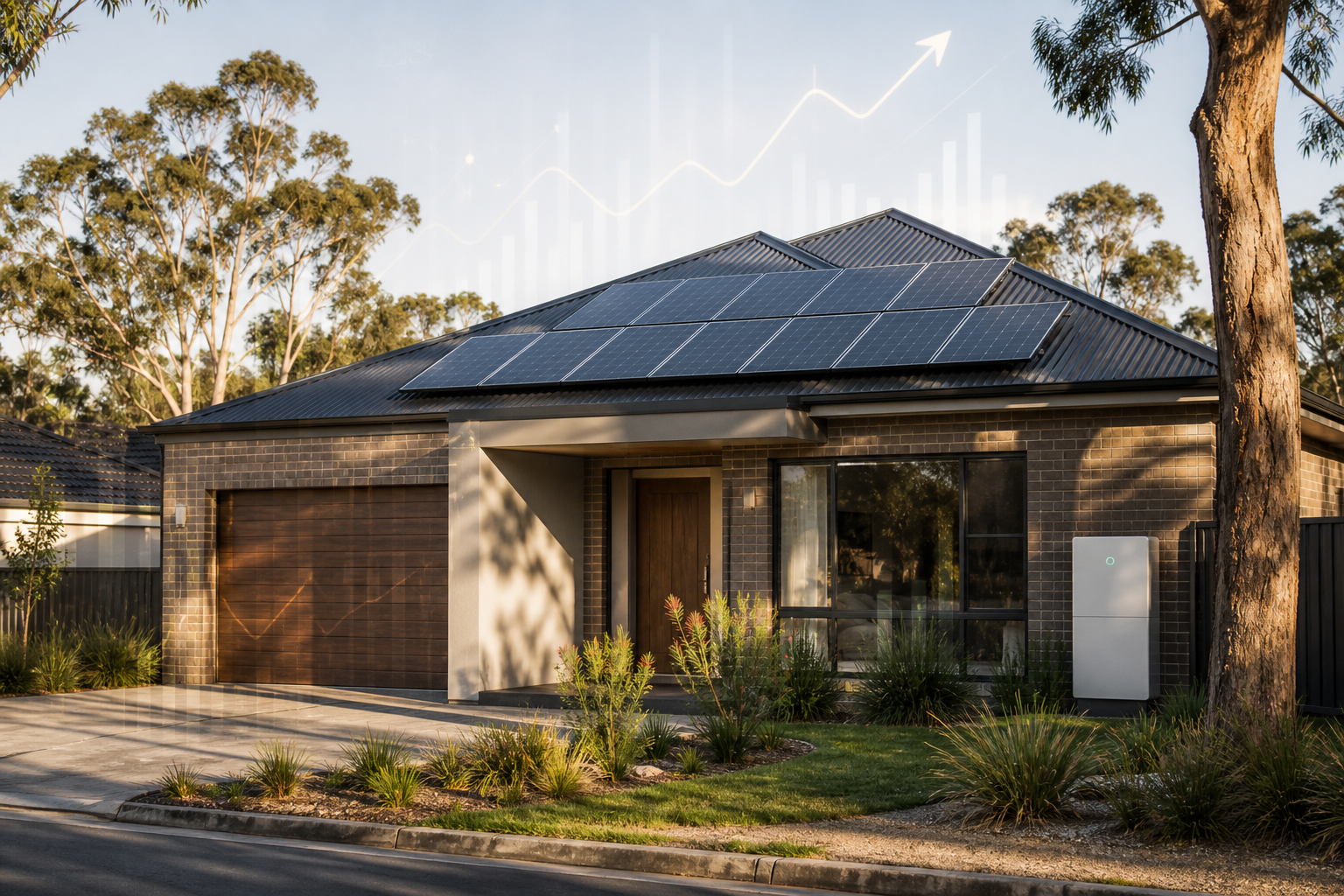
Adding $20–40k of solar and a battery to your mortgage can work, but only if the numbers stack up after stress‑testing. In practice, that means comparing conservative power‑bill savings to the repayments on the extra borrowing, checking your buffer, and making sure you’re not turning a 10–15 year asset into 30 years of interest.
This worked example shows how a typical Australian household might release equity to fund solar and a battery, step by step, so you can copy the process with your own numbers this week.
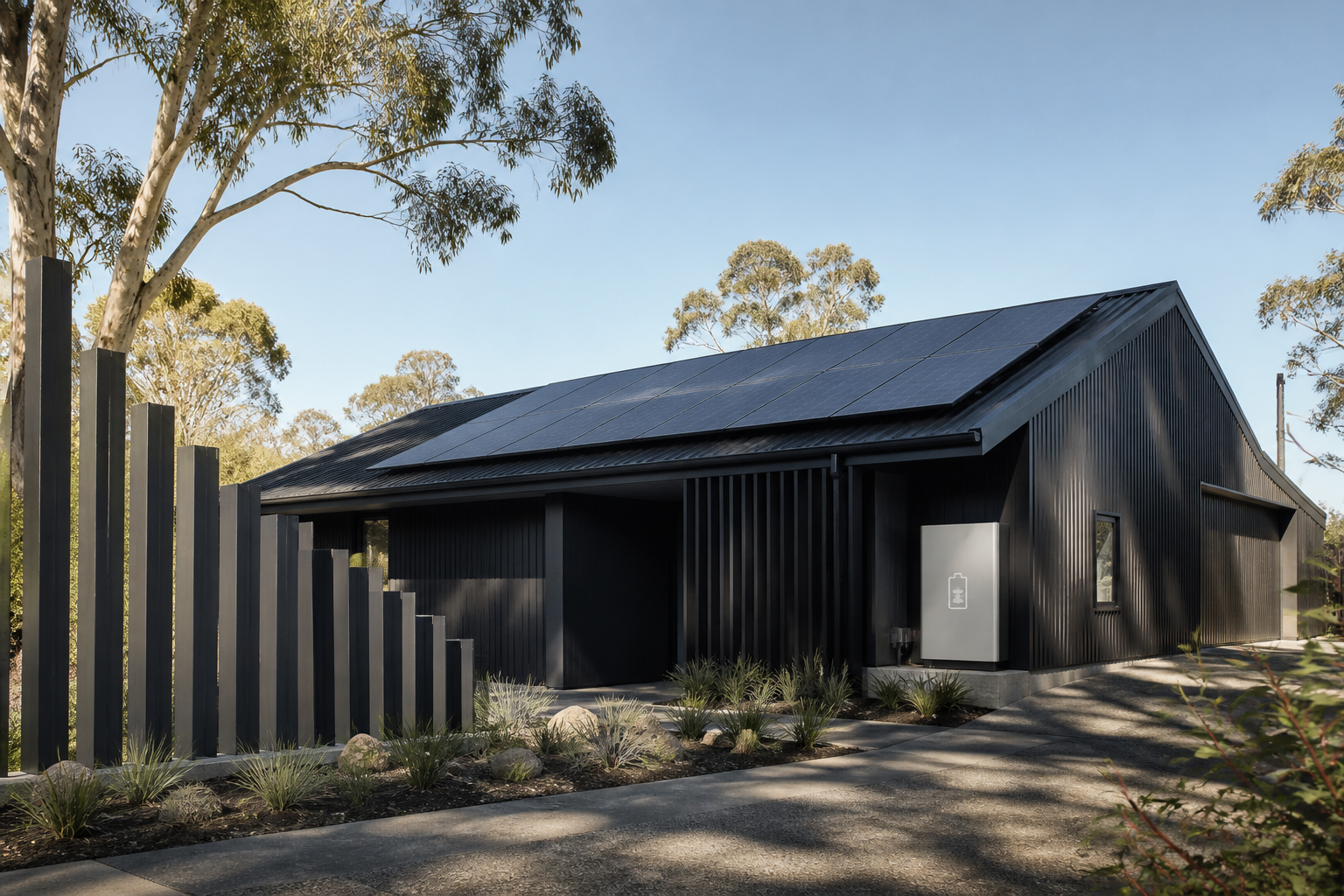
1. The scenario: releasing $30k equity for solar + battery
To keep things concrete, we’ll use an example that fits a lot of owner‑occupiers and small businesses.
1.1 Household and property snapshot
Assume:
- Owner‑occupied home valued at $900,000
- Current home loan: $540,000 (principal & interest, 25 years remaining)
- Current rate: 6.0% p.a. (illustrative only, not a quote)
- Current loan‑to‑value ratio (LVR): 60% ($540k ÷ $900k)
You’re considering:
- 10 kW solar system + 10–13 kWh battery
- Installed cash price: $30,000 after STCs and any rebates
- You want to release equity and add $30k to your home loan to cover it.
Based on most lender rules, you can generally borrow up to 80% of the property value without paying lenders mortgage insurance (LMI). That’s:
- 80% of $900,000 = $720,000
- Existing loan $540,000 → maximum theoretical top‑up ≈ $180,000, subject to serviceability
So a $20–40k equity release is well within the LVR limit here. The question isn’t “Can I?”; it’s “Should I, and on what terms?”
If you’re not sure how much equity you can safely access, see the bigger‑picture guide: Using Home Equity for Solar: How Much You Can Really Borrow.
1.2 Baseline power bills and expected savings
Assume this household currently pays:
- $450 per quarter in electricity ($1,800 per year)
- They’re home afternoons and evenings, so they can self‑consume a decent portion of solar
- Installer quotes say the system could save $2,200–$2,600 per year
For conservative planning, we’ll follow the rule from earlier solar finance work: stress‑test savings at 20% below the quote. That’s roughly:
- Expected savings (installer): $2,400/year (mid‑point)
- Conservative savings: $1,900/year (about 20% lower)
We’ll compare this to the cost of borrowing $30,000 on different loan structures.
2. Option 1: Add $30k to the main 25‑year mortgage
This is the default many banks and brokers offer: just increase the existing loan limit and keep one single 25‑year term.
2.1 Current vs post‑solar repayments
First, calculate current repayments (rounded, P&I, 6.0%, 25 years):
- Current loan: $540,000
- Monthly repayment: ≈ $3,480
Now add $30,000 over the same term and rate:
- New loan: $570,000
- Monthly repayment: ≈ $3,675
- Increase: about $195/month (≈ $2,340/year)
So you’ve added $2,340/year of mortgage repayments to likely save around $1,900–$2,400/year on power bills.
On a simple cashflow basis, you’re roughly break‑even or a small winner, depending on how the system performs and where power prices go.
2.2 Total interest cost of wrapping solar into 25 years
The catch is time. Spreading $30k over 25 years means paying interest for a long time.
Approximate total cost of the extra $30k over 25 years at 6.0%:
- Monthly repayment on $30k alone (25 yrs, 6.0%): ≈ $193
- Total paid over 25 years: $193 × 300 = $57,900
- Total interest: about $27,900
So your $30k system effectively costs almost $58k over 25 years if rates stay around 6%.
This is exactly the risk highlighted across our solar finance cluster: long terms at moderate rates can cost more than shorter, slightly higher‑rate products once you add up total dollars. (See Comparing ‘Interest‑Free’ Solar Deals With Using Your Home Loan for a similar comparison logic.)
2.3 Stress‑testing if rates rise 3%
APRA expects banks to test borrowing at least 3% above the actual rate. You should too.
If your rate rose from 6.0% to 9.0%:
- Extra $30k over 25 yrs at 9.0% → repayment ≈ $252/month
- Total paid over 25 years: $252 × 300 = $75,600
- Total interest: about $45,600
Now the $30k solar package ends up costing more than double the upfront price. Meanwhile, your power‑bill savings are unlikely to double.
2.4 When this structure can still make sense
Spreading the cost over 25 years can work when:
- You’re under real cashflow pressure now but expect income to rise
- You’re otherwise on track to pay the loan down faster (extra repayments or offset)
- You discipline yourself to clear the “solar portion” in 7–10 years, even though the term is longer
But for most households, a separate, shorter loan split is safer.
 Structuring a separate solar split can dramatically reduce lifetime interest compared to wrapping costs into a long-term mortgage. ### 3.1 10‑year split: base example at 6.0% Assume: - Main mortgage stays at $540,000 over 25 years - New solar split: $30,000 over…
The strategy continues below
You've seen the problem and the groundwork — now unlock the exact steps our CPA-certified brokers use, including 7 more sections. Enter your email for instant, free full access.
Free access. No spam — unsubscribe anytime. Your details stay confidential.
Frequently asked questions
Is it worth adding $30k of solar and batteries to my mortgage?▾
How much will my repayments go up if I add $30k for solar?▾
Should I get a separate loan split for solar or just increase my existing home loan?▾
What if my solar savings are lower than the installer’s quote?▾
Is it safer to use a green loan or personal loan instead of equity release?▾
How big should my cash buffer be if I borrow for solar?▾
Speak with a specialist advisor
Confidential consultation, bespoke advice for your situation.