Article
How to Own a Coastal or Regional Home Without Giving Up the City
Thinking about a sea‑change or regional base but not ready to give up the city home? This guide shows how to finance two high‑value properties safely, test your borrowing capacity, and structure loans and buffers so lifestyle upgrades don’t become a future fire sale.
Key Takeaway
To buy a premium coastal or regional home while keeping a city base, borrowers must show lenders they can service both loans under APRA’s 3% buffer and still maintain 6–12 months of cashflow buffers. The article explains how banks treat second residences versus investments, typical 70–80% LVR limits on non‑standard or risk‑postcode properties, and the impact of 2026 negative gearing reforms on established homes. It ends with a one‑week plan to test serviceability, buffers and structure before making an offer.
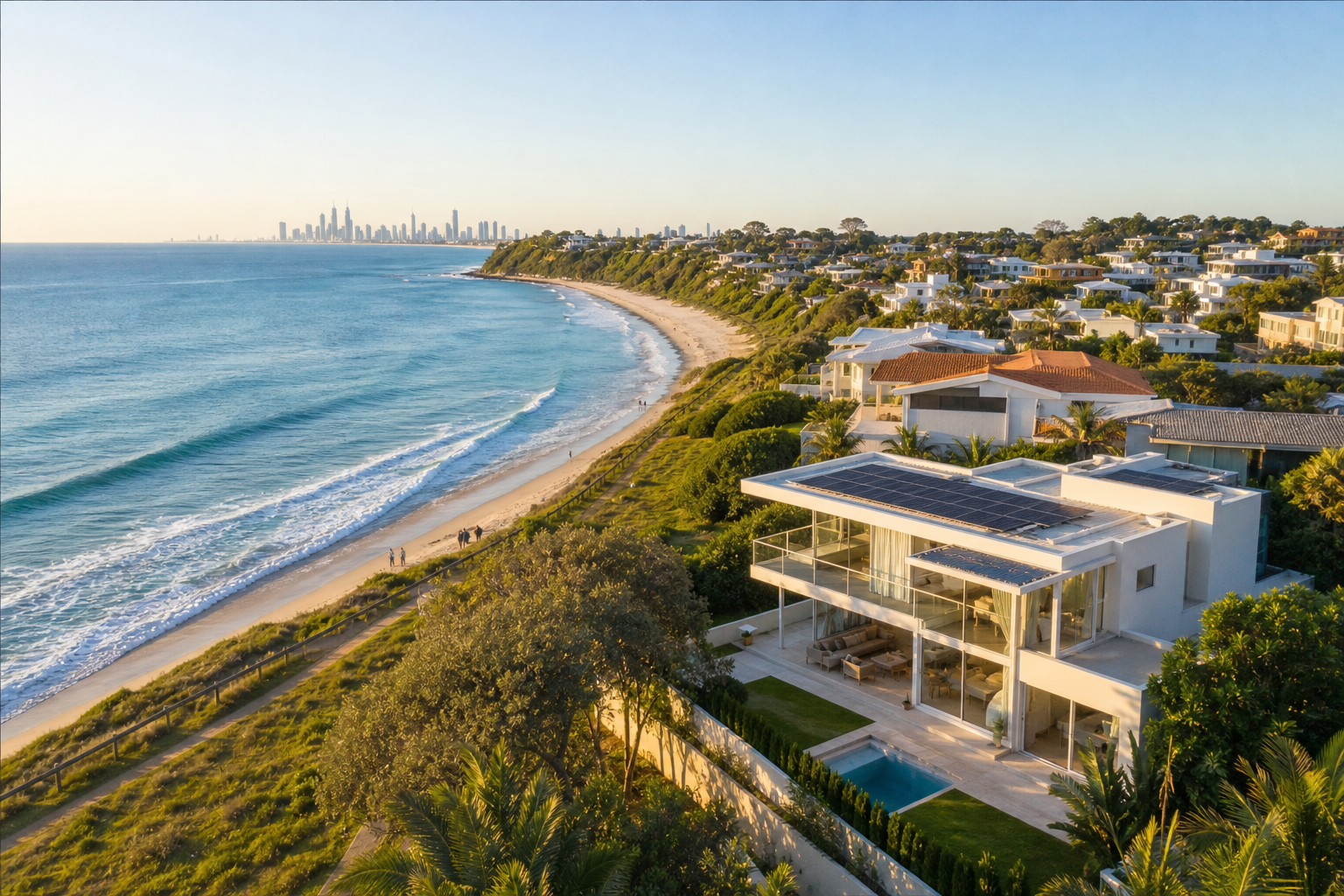
You can buy a premium coastal or regional home and keep your city base – but only if your borrowing capacity, loan structure and buffers are strong enough to handle two large debts under the banks’ rules and your own risk limits.
The core checks are: 1) can you pass lenders’ serviceability tests on both loans using APRA’s 3% buffer, 2) can you still hold 6–12 months of cash and offset buffers, and 3) is the second home structured correctly for tax, future use and exit options.
This guide walks through those decisions so you can move within weeks, not years.

1. Clarify your real plan for the two properties
Before talking to banks, be brutally clear about how you’ll actually use both homes over the next 5–10 years. That plan drives everything: loan type, tax treatment, buffers and which lenders will play ball.
1.1 Common coastal and regional + city setups
Most clients considering a premium coastal or regional home while keeping a city base fit one of these patterns:
-
City main home + lifestyle weekender
• City home remains your primary residence.
• Coastal or regional home is used on weekends and holidays.
• May be partly rented (short‑stay or longer term) to offset costs. -
City investment + coastal/regional main home
• You move your life to the lifestyle property.
• City property becomes a rental or is kept vacant for future kids / parents / work.
• Heavier tax and negative gearing questions. -
Two genuine homes for work and family
• One near schools / CBD, one near the coast / region.
• Use varies by school terms, seasons or work pattern (e.g. hybrid office days). -
Staging an eventual full sea‑change
• Buy now while borrowing capacity is strong.
• Use as holiday home, then move there in 3–7 years.
Write down your best guess for:
- Where you’ll sleep most nights in the next 2, 5 and 10 years.
- Whether either property might become an investment or be sold.
- Who needs to live within 30–40 minutes of which school or workplace.
You don’t need certainty, but lenders and your accountant both need a realistic story.
Tip: If the property is rural residential, large acreage or has unusual zoning, read this in parallel: Financing Rural Residential, Acreage and Lifestyle Blocks Without Nasty Surprises.
1.2 Decide what success looks like – financially and personally
For high‑income or business‑owner households, the danger is not getting approved; it’s quietly overstretching and resenting the property.
Define success in both money and lifestyle terms:
-
Money:
- Combined repayments at or below 30–35% of net income (aligns with existing guidance for geared professionals).
- 6–12 months of essential costs and all loan repayments in cash or offset.
- Ability to absorb at least a 2–3% rate rise and a vacancy / rent drop on any investment property.
-
Lifestyle:
- Realistic travel time, especially with kids.
- Capacity to afford air‑conditioning, maintenance, moorings, pool care, strata levies, rural slashing, etc.
- One partner can lose income for 6–12 months without forced sale.
If the numbers only work when you assume perfect health, perfect tenants and flat rates, you don’t have a safe plan yet.
2. How lenders view two high‑value homes
You might see “home” and “holiday house”. Lenders see two large secured loans and test them under stressed conditions.
2.1 Serviceability with the APRA buffer
Most banks must test your ability to repay all home and investment loans at 3% above the actual rate (APRA buffer).
So if you expect ~6% p.a. variable:
- Assessment rate ≈ 9% p.a. on all loans.
- They’ll also load other debts (credit cards, car loans) and apply a minimum living expense (HEM).
Worked example (illustrative only)
- City home loan: $1.8m, 25 years remaining.
- New coastal home loan: $1.2m, 30 years.
- Actual rates: assume 6% principal & interest (P&I) on both.
- Net household income: $550,000 p.a.
Approximate P&I repayments at 6%:
- $1.8m over 25 years ≈ $140,000 p.a. (~$11,700/month).
- $1.2m over 30 years ≈ $86,000 p.a. (~$7,200/month).
- Total actual repayments ≈ $226,000 p.a. (~$18,800/month).
At a 9% assessment rate, servicing calculators will assume materially higher repayments, often pushing assessed debt service well above $260,000 p.a. The question becomes: does your after‑tax income comfortably cover that once they add HEM, school fees and other debts?
This is why high‑income clients are often surprised their borrowing limit is lower than their lifestyle intuition.
2.2 Different property types, different LVRs
The maximum loan‑to‑value ratio (LVR) may vary between your city base and your coastal/regional property:
- Standard metro houses/units: often up to 80% LVR (or 90–95% with LMI if policy fit).
- Coastal, flood or bushfire risk postcodes: LVRs may be shaded to 70–80%, and valuations can be conservative. See: Buying in Coastal, Flood or Bushfire Areas: How Lenders See Risk.
- Waterfront, clifftop, architect‑designed homes: often classed as “non‑standard” security with tighter LVRs and more scrutiny on replacement cost and insurability (Financing Waterfront, Clifftop and Architect Homes Without Nasty Surprises).
- Lifestyle acreage / rural residential: policy can shift sharply with zoning or lack of services.
If you assume 80% LVR and the bank caps you at 70%, you might need an extra $200–400k cash or equity on a $2m purchase.
2.3 How banks categorise the second home
A second property will usually be classed as either:
- Owner‑occupied home: if you genuinely live there or split time reasonably and do not primarily rent it.
- Investment: if it’s rented more than it’s used personally, especially on a long‑term lease.
This affects:
- The rate (investment loans are usually slightly more expensive).
- How your rental income is treated in servicing.
- Future tax treatment – noting that loan purpose, not property type, drives deductibility.
Short‑term letting (Airbnb style) sits in a grey zone. Different lenders treat this differently in both policy and income shading, which we cover further below.
The strategy continues below
You've seen the problem and the groundwork — now unlock the exact steps our CPA-certified brokers use, including 7 more sections. Enter your email for instant, free full access.
Free access. No spam — unsubscribe anytime. Your details stay confidential.
Frequently asked questions
Can I use equity in my city home to fund the coastal property deposit?▾
Will my borrowing capacity be higher if I turn my city home into an investment?▾
Do banks like short‑term holiday letting income for servicing?▾
Is it safer to sell the city home and just buy the coastal property?▾
How much should I allow for insurance and risk in coastal or bushfire areas?▾
Can I put both properties under one big loan to keep things simple?▾
Speak with a specialist advisor
Confidential consultation, bespoke advice for your situation.