Loading the latest on mortgages, RBA & inflation…

Article

How Green Square Property Types Shape Your Home Loan Options

A decision-grade guide to how Green Square property types – high-rise, mixed-use, small apartments and commercial – affect your borrowing power, LVRs and lender choice this year.

17 July 2026Updated 17 July 202613 min read

Key Takeaway

Lenders apply stricter rules to many Green Square properties, especially small apartments under ~40 m², high-density towers and mixed-use buildings, often capping LVRs at 70–80% and tightening serviceability buffers. Building-level issues like cladding, defects and sinking fund strength frequently matter more than age or aesthetics. Buyers should pre-check lender appetite for specific buildings, stress-test borrowing with APRA’s 3% buffer and use standalone securities for investments to keep refinancing flexibility.
How Green Square Property Types Shape Your Home Loan Options

Green Square’s property types don’t all finance the same way. High‑density towers, mixed‑use buildings, small apartments and commercial or live‑work spaces around Zetland, Waterloo and Rosebery each trigger different lender rules, LVR caps and valuation behaviours. If you ignore those differences, you risk a last‑minute “computer says no” or a valuation that blows up your settlement.

This guide breaks down the main local property types, the lending rules that usually apply, and what you can do this week to match your building and loan strategy – especially if you’re self‑employed, investing or upgrading.


Quick answers: how property type changes your borrowing power

1. High‑density apartments in Green Square often sit on lender restriction lists, which can cap LVRs at 70–80% or exclude specific buildings altogether.

2. Many lenders want a minimum internal area around 40 m² (excluding balcony and car space) for standard apartment lending; smaller units usually face lower LVR caps and fewer LMI options.

3. Mixed‑use buildings (retail below, residential above) and serviced‑apartment style stock can trigger commercial‑style policies, tighter valuations and higher deposit needs.

4. Building‑level risks – cladding, defect history, sinking fund strength – can matter more than age or finishes when a credit team decides your LVR and whether to approve your loan.

Act this week by checking your target building against lender policies, ordering a pre‑purchase strata report, and stress‑testing your numbers with at least a 3% rate buffer (in line with APRA guidance).


1. The Green Square context: why lenders treat it differently

1.1 High‑density postcodes under the microscope

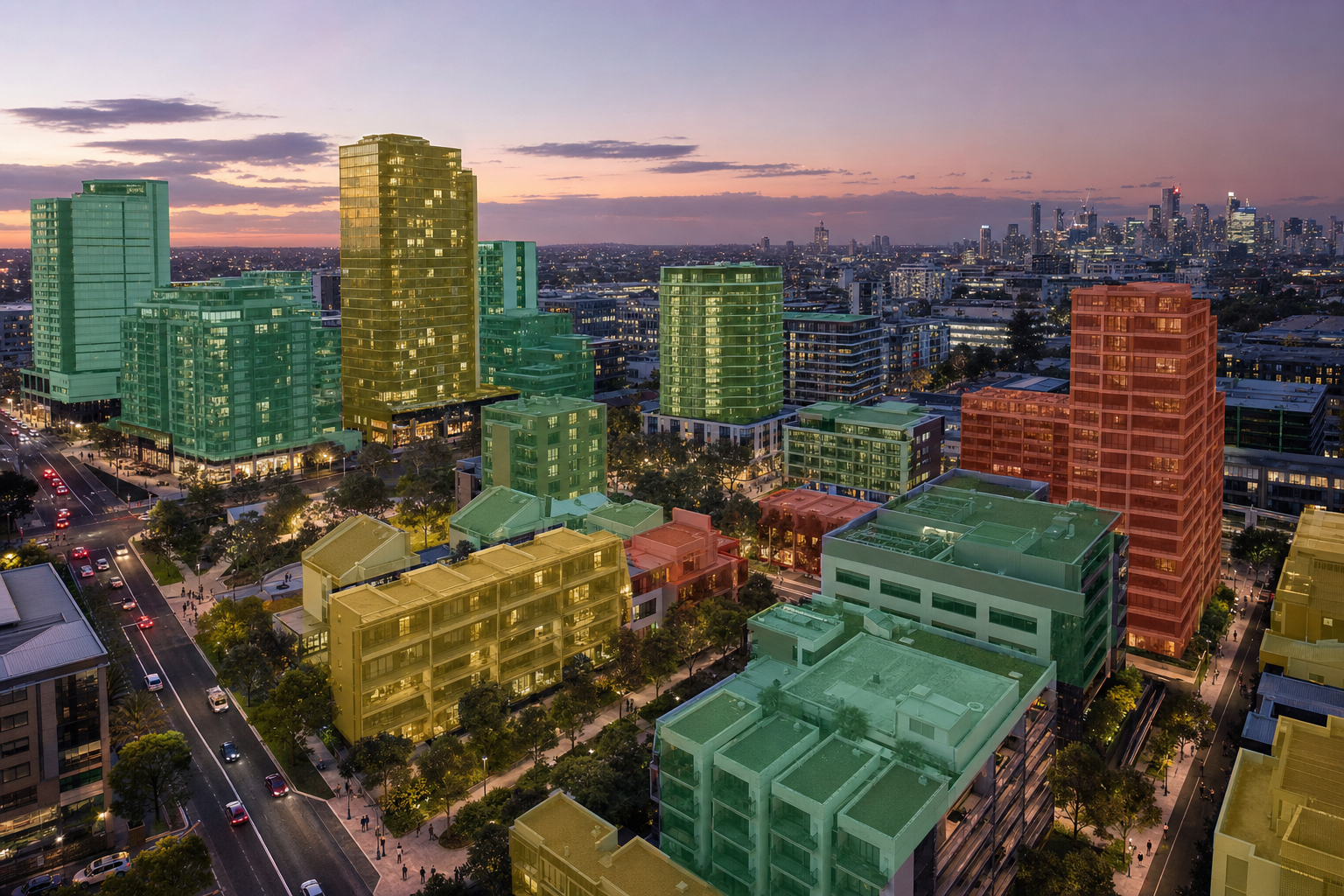
Green Square is one of Sydney’s densest precincts. Thousands of apartments in a tight radius means:

  • Higher exposure for bank loan books if values fall in the area
  • A lot of investor activity, especially in some towers
  • More scope for building‑specific issues (defects, cladding, poor strata management)

As a result, many lenders flag individual buildings and entire postcodes as higher risk.

In Mascot, similar high‑density towers are often on lender restriction lists that cap LVRs at 70–80% or exclude certain towers entirely, even when neighbouring buildings look the same on the outside. Green Square sees the same pattern: individual buildings, not just the postcode, end up on internal watchlists [src: /insights/mascot-property-types-local-lending-rules; /insights/first-home-guarantee-off-the-plan-green-square].
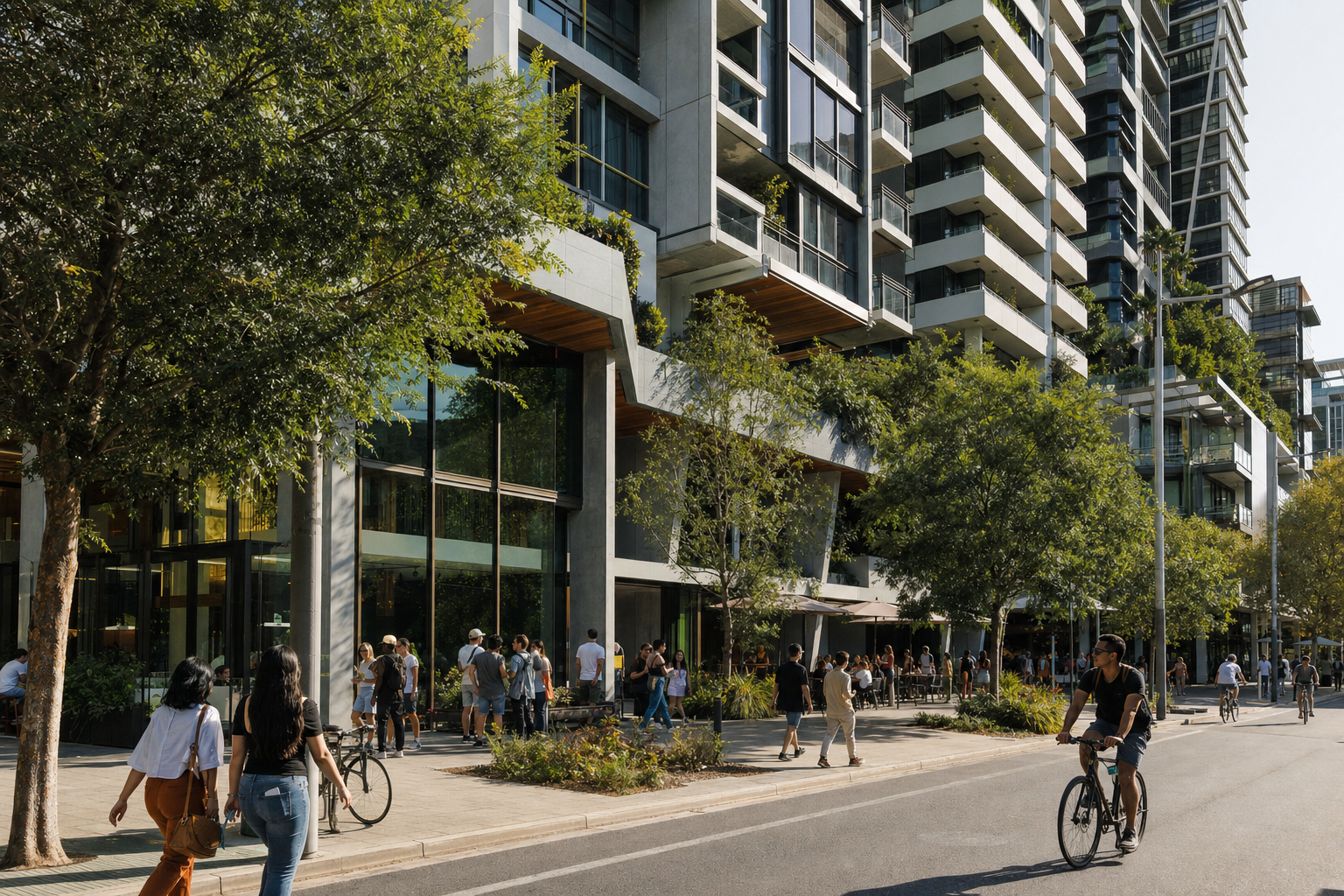
High-rise mixed-use apartment building in Green Square with shops below High-density and mixed-use buildings in Green Square each attract different lending rules.

1.2 Building selection is as important as lender selection

One of the key lessons from across the Green Square content hub is that your building choice can completely change your lending options, even if your income and deposit don’t change.

Local brokers increasingly keep informal matrices of which lenders and valuers are comfortable with specific complexes based on:

  • Unit size profiles
  • Mixed‑use vs purely residential
  • Past valuation behaviour
  • Known defects or cladding rectification
  • Strength of the sinking fund

This is why a guide on local knowledge exists on its own: Why Green Square buyers often need a truly local mortgage broker. If you want an 80–90% lend in a tower that sits on a few restriction lists, that local intelligence can be the difference between approval and decline.

1.3 APRA buffer and valuation risk in high‑density

Two national rules bite harder in Green Square:

  • APRA’s minimum 3% serviceability buffer: lenders test if you can afford repayments at your rate plus at least 3%. On a 6% actual rate, that’s 9%.
  • Conservative valuers in high‑density areas: valuers may look harder at recent sales in your building, incentives from developers and investor concentration.

Our separate guide, How to stay ahead of valuation and settlement risk in Green Square, dives into this, but the short version is: leave more buffers in high‑density postcodes than you would in a standalone house suburb.


2. Core local property types – and how banks see them

2.1 Standard apartments (but in a high‑density tower)

These are typical 1–3 bedroom units, generally above ~50 m² internally, in pure residential towers with retail limited to ground‑floor cafes and small shops.

For these, many mainstream lenders will consider:

  • Up to 90–95% LVR with LMI for strong borrowers, if the building is not black‑listed
  • 80% LVR without LMI for owner‑occupiers and investors
  • Standard rates and policies, subject to postcode and building checks

However, being in Green Square means extra scrutiny:

  • Valuers may come in lower if there are many similar units on the market
  • Some lenders apply tighter HEM (living expense) assumptions in inner‑city areas
  • Investor‑heavy buildings may see more conservative assumptions about rent

2.2 Small apartments and studios

This is where policy really diverges.

Accrued knowledge across our content: many Australian lenders set minimum internal area thresholds around 40 m² for standard apartment lending, excluding balconies and car spaces. Units under that often face stricter LVRs and fewer LMI options [src: /insights/property-types-zoning-titles-that-trip-up-finance].

In Green Square, that translates into patterns like:

  • 35–39 m² internal studios:
    • Fewer mainstream lenders
    • LVR caps at 70–80%
    • Often no LMI options, so you need a bigger deposit
  • 40–49 m² one‑bedrooms:
    • Much broader lender panel
    • Potentially up to 90% LVR with LMI
    • But some banks still cap at 80% in specific towers

If you’re a first‑home buyer trying to stretch into the area, this size threshold can decide whether a 10% deposit is enough or you suddenly need 20–30%.

2.3 Mixed‑use and “over the shops” apartments

Many Green Square and inner‑south buildings are mixed‑use:

  • Retail or commercial on lower levels (cafes, gyms, small supermarkets)
  • Residential apartments above

Lenders worry about:

  • Noise, smells and late‑night activity affecting resale
  • Strata complexity and different use zones
  • Higher vacancy risk in commercial portions

This can show up as:

  • LVR caps at 70–80%
  • Higher shading of rental income
  • Requirement for more valuation commentary
  • In some cases, moving the deal to a commercial lending team (especially for larger mixed‑use or live‑work stock)

If your target building has a lot of non‑residential use – for example, large office levels or a branded hotel component – assume tougher rules until proven otherwise.

2.4 Townhouses and walk‑up blocks

Not everything in Green Square is a tower. There are:

  • 3–4 storey walk‑ups
  • Townhouse rows
  • Older low‑rise blocks

These often score better with lenders because:

  • Lower density can mean more stable valuations
  • Less building‑wide defect exposure
  • Fewer lender restriction lists for this stock

You may still run into issues with:

  • Poorly funded sinking funds
  • Old waterproofing or structural issues
  • Heritage or zoning quirks

But in many cases, a well‑run low‑rise block will give you more lender options at higher LVRs than a problematic high‑rise.

2.5 Commercial, live‑work and small business premises

Investors and small businesses in Green Square often look at:

  • Retail shops on the ground floor of residential towers
  • Small offices or medical suites
  • Live‑work or flexible business/residential stock

These usually sit under commercial lending rules, which can mean:

  • LVR caps around 60–70% (sometimes higher with strong profiles)
  • Shorter loan terms (e.g. 15–20 years vs 30 years for residential)
  • Higher interest rates than residential
  • More detailed lease and cashflow analysis

We’ll come back to this in Section 5, especially for self‑employed borrowers.

Compact studio apartment in Zetland showing small internal floor area Small apartments under about 40 m² internal often face tighter LVR caps and fewer lender options.


3. How property type changes your LVR, deposit and loan terms

Different Green Square property types produce different borrowing conditions. Here’s an indicative comparison (actual policies vary by lender and over time).

3.1 Side‑by‑side comparison table

Property type (Green Square)Typical internal sizeLikely LVR range*LMI availabilityAssessment quirks
Standard 2‑bed in reputable high‑rise70–85 m²Up to 90–95%YesBuilding must pass restriction checks, valuation scrutiny
1‑bed 45–50 m² in high‑rise45–50 m²80–90%Often yesSome lenders cap at 80% in flagged towers
Small studio 35–39 m²35–39 m²70–80%LimitedFewer lenders, min size rules, closer valuer scrutiny
Mixed‑use building over substantial retail50–80 m²70–80%SometimesMay be treated as specialised security
Low‑rise walk‑up apartment50–80 m²80–90%YesFocus on strata health and building condition
Strata retail or office (commercial)N/A60–70%No (resi LMI)Commercial assessment, lease and cashflow driven

*Illustrative only – actual LVRs depend on lender, borrower profile and time of assessment.

3.2 Worked example: deposit needs by property type

Assume you’re looking at three properties, each priced at $800,000:

  1. Standard 2‑bed apartment in a well‑regarded Zetland tower – lender allows 90% LVR with LMI.

    • Max loan: 90% × $800,000 = $720,000
    • Minimum deposit (excluding costs): $80,000
    • Plus stamp duty and costs: assume ~5% = $40,000
    • Total cash required: ~$120,000
  2. Small studio of 38 m² in a different high‑rise – lender caps at 80% LVR, no LMI available.

    • Max loan: 80% × $800,000 = $640,000
    • Minimum deposit (excluding costs): $160,000
    • Plus ~5% costs: $40,000
    • Total cash required: ~$200,000
  3. Strata retail space for your small business – lender offers 65% LVR under commercial policy.

    • Max loan: 65% × $800,000 = $520,000
    • Minimum deposit (excluding costs): $280,000
    • Add commercial legals and other costs: say $45,000+
    • Total cash required: ~$325,000+

Same purchase price. Completely different deposit realities purely because of property type.


4. Strata quality, defects and cladding: hidden lending rules

4.1 Why building health can trump everything else

Across inner‑south Sydney, including Mascot and Green Square, we’ve seen that building‑level factors such as sinking fund strength, defect history and cladding risk often have more impact on lending outcomes than age or aesthetics [src: /insights/mascot-property-types-local-lending-rules; /insights/rose-bay-property-types-lending-rules].

Lenders and valuers look for red flags like:

  • Ongoing significant defects (water ingress, structural movement)
  • Combustible cladding yet to be fully remediated
  • Legal disputes between owners and the builder/developer
  • Very low sinking fund balances compared to likely future works

If these show up in the strata report or valuation, lenders may:

  • Reduce your maximum LVR
  • Decline to lend at all against that building
  • Require evidence of remediation works and funding

4.2 What you can do before you sign

Before committing, particularly in a high‑rise:

  1. Order an independent strata report – don’t rely solely on the vendor’s bundle.
  2. Look closely at:
    • Defect history and engineers’ reports
    • Cladding status and remediation plans
    • Sinking fund balance vs projected works
  3. Share the report with your broker or banker early.

If your strata report shows big works pending but no funded plan, treat it as both a lifestyle and lending risk.

4.3 How this interacts with valuation and settlement risk

A building on a lender’s internal watchlist can still sometimes be funded – but often at lower LVR, and only if the valuation supports the price.

The guide How to stay ahead of valuation and settlement risk in Green Square sets out a step‑by‑step checklist. The key local insight is: a “good” building might still get a conservative valuation if comparable sales are soft, incentives are high, or investor concentration is heavy.


5. Self‑employed buyers, investors and small businesses

5.1 Self‑employed and complex income in Green Square buildings

If your income is complex (self‑employed, multiple contracts, company/trust dividends), you’ve already seen that banks can be harder work. Around Green Square, you also have to layer on building risk and postcode rules.

As explained in Navigating complex income home loans around Green Square:

  • Some lenders love self‑employed borrowers but are cautious about certain Green Square towers.
  • Others are more relaxed about the buildings but conservative on complex income.

The trick is to match your income profile to a lender who’s also comfortable with your target building. That’s where the local “which bank likes which building” matrix becomes critical.

5.2 Investors and the 2026–27 tax changes

If you’re investing in Green Square, you also need to think about the upcoming negative gearing and CGT reforms. In summary:

  • Existing properties held before 7:30pm on 12 May 2026 can generally continue under current rules until sold.
  • From 1 July 2027, negative gearing of residential property will be limited to new builds.
  • Investors buying established residential properties after 12 May 2026 generally won’t be able to offset rental losses against wages.

For Green Square investors, that means:

  • New build apartments may be more attractive from a tax perspective, but can carry more settlement and valuation risk.
  • Established apartments may have tighter tax settings but more known building histories.

Your loan structure should reflect this – typically standalone loans per property with internal splits, not cross‑collateralised portfolios – so you can adjust strategy as rules evolve.

5.3 Small businesses buying in Green Square

If you’re a small business owner looking at:

  • A shopfront or office in a strata building
  • A live‑work space you partly occupy and partly lease

Expect lenders to:

  • Assess business financials and tax returns alongside personal income
  • Scrutinise leases (length, rent, tenant quality)
  • Apply different serviceability models than for residential lending

A CPA‑qualified broker who also understands tax can help you decide whether to:

  • Hold the property in your personal name
  • Use a company or trust
  • Consider an SMSF purchase (with superannuation‑specific lending rules and restrictions)

Retail shopfront with apartments above in Waterloo, Sydney Strata retail and live-work spaces in Green Square are usually assessed under commercial-style lending policies.


6. Off‑the‑plan and new builds: special local rules

6.1 Long timelines and policy drift

Green Square has seen a lot of off‑the‑plan and newly completed stock. Financing these is absolutely possible, but you need to plan for:

  • Time between exchange and settlement – 12–36 months is common
  • Potential changes in lending policy over that period
  • Shifts in valuation as more stock hits the market

The guide How to Finance a New or Off‑the‑Plan Apartment in Green Square goes into detail, but the high‑level rule is: treat an off‑the‑plan purchase as a 5–10 year project, not a one‑off transaction.

6.2 First Home Guarantee and scheme buyers

If you’re using the First Home Guarantee (FHBG) with as little as a 5% deposit:

  • The project must meet Housing Australia’s rules on timing and price caps.
  • Not all Green Square buildings and stages will qualify at any given time.
  • You also still face lender building and postcode rules.

The article Using the First Home Guarantee to Buy Off-the-Plan in Green Square explains how FHBG interacts with building selection and settlement risk.

6.3 Worked example: settlement risk on off‑the‑plan

Imagine you exchanged on a new one‑bed for $900,000 with a 10% deposit ($90,000). You’re expecting to borrow 90% at settlement.

At settlement, the valuer comes back at $850,000 instead of $900,000.

  • Max 90% lend is now 90% × $850,000 = $765,000
  • You’ve already paid $90,000 deposit
  • Contract price is $900,000 – $90,000 = $810,000 remaining
  • Shortfall: $810,000 – $765,000 = $45,000 extra cash required

If you don’t have that extra $45,000, you may need to:

  • Negotiate with the vendor (often difficult)
  • Find another lender with a more generous valuation (risky on time)
  • Seek a guarantor structure, if appropriate

Planning for this possibility upfront – especially in high‑density areas – is critical.


7. One‑week action plan: match your building and loan strategy

Day 1–2: Clarify your target property type and budget

  • Decide whether you’re targeting:
    • Standard apartments
    • Small/compact apartments
    • Mixed‑use or over‑the‑shop
    • Townhouses/walk‑ups
    • Commercial or live‑work
  • Run a quick number check using a borrowing power calculator (e.g. localknowledge.finance tools) assuming:
    • At least a 3% rate buffer
    • Current debts and living costs

Day 3–4: Shortlist buildings and run “policy checks”

  • For each building on your shortlist, gather:
    • Approximate internal size (m²) of the units you like
    • Mixed‑use profile (retail/office components)
    • Age and developer/builder name
  • Ask a local broker:
    • Which lenders are currently open to this building and at what LVR ranges?
    • Any known valuation challenges or defect histories?

Day 5–6: Order reports and stress‑test

  • For your top 1–2 buildings, order strata reports (or review recent ones if reliable).
  • Share them with your broker and/or solicitor.
  • Stress‑test your position by asking:
    • Could you handle a valuation 5–10% lower than your offer?
    • Could you still complete if the lender capped LVR at 80% instead of 90%?

Day 7: Set your rules of engagement

  • Decide your personal red lines, for example:
    • “I won’t buy in a building where my maximum LVR is under 80%.”
    • “I’ll only consider studios over 40 m² internal.”
    • “I’ll avoid towers with unresolved cladding or major defects.”
  • Lock in a pre‑approval that explicitly notes building or postcode conditions where possible.

If you want that process joined up with tax planning and long‑term strategy, see How a Green Square Broker Builds a 10‑Year Property Plan for how a single conversation can map the next decade of moves instead of just the next loan.


Key takeaways

  • Lenders don’t treat all Green Square properties equally. Property type, size and building history can change your LVR and lender options more than your suburb choice.
  • Apartments under ~40 m² internal, and mixed‑use or serviced‑apartment style stock, often face lower LVR caps and fewer LMI options, meaning much larger deposits.
  • Building‑level issues – cladding, defects, sinking fund health and restriction lists – can trump individual borrower strength when banks decide whether to lend.
  • Self‑employed borrowers, investors and small businesses around Green Square need to align income complexity, tax strategy and building risk with the right lender policy.
  • Off‑the‑plan and new builds require extra planning for valuation and policy drift, especially with upcoming negative gearing and CGT changes.

If you’re weighing up a specific Green Square building or juggling complex income with a high‑density purchase, it’s worth getting joined‑up advice. At Local Knowledge Finance, you can cover your tax, your loan and your next move with one expert – a CPA, Registered Tax Agent and Mortgage Broker in a single consultation.

Book a free 15‑minute Green Square strategy call or run your numbers through our borrowing power calculator at localknowledge.finance before you sign a contract.

General advice only.

Frequently asked questions

What is the minimum apartment size banks accept in Green Square?
Many lenders look for at least about 40 m² of internal living area, excluding balconies and car spaces, for standard apartment lending. Units smaller than this often face lower maximum LVRs, fewer lender options and may not be eligible for LMI, meaning you’ll need a larger deposit. Exact thresholds differ by lender, so it’s important to confirm for your specific building.
Can I get a 90% loan for a studio in Zetland or Waterloo?
It’s possible but far from guaranteed. Studios under roughly 40 m² internal are often capped at 70–80% LVR, and some lenders won’t lend on them at all. Slightly larger one‑bedrooms over 40 m² are usually easier to finance at higher LVRs. You need to check both the unit size and whether the specific building is on any lender restriction lists.
How do mixed-use buildings affect my home loan options?
Apartments above substantial retail or commercial space are often treated as higher risk by lenders. This can mean lower LVR caps, more conservative valuations, or in some cases the loan being assessed under commercial lending rules. You’ll usually need a larger deposit, and not every bank will be comfortable at standard residential rates or terms.
Do building defects or cladding issues stop banks from lending?
Serious unresolved defects or combustible cladding can lead some lenders to decline the building entirely or reduce the maximum LVR. Others may lend only once remediation is fully funded and underway. A detailed strata report and open discussion with your broker or lender are essential before you commit to a purchase in a building with known issues.
Is it harder to get finance for off-the-plan apartments in Green Square?
Off‑the‑plan apartments are financeable, but the risks are higher in high‑density areas like Green Square. You face a longer timeline where lending policies and interest rates can change, and a greater risk that the final valuation comes in below your contract price. Planning for a bigger buffer and having lender and building‑specific advice early can make a real difference.
Can my small business buy a shop or office in Green Square with a home loan?
Strata shops and offices in Green Square are usually financed under commercial lending rules, not standard home loans. That typically means lower maximum LVRs, shorter loan terms and a greater focus on lease income and business financials. In some cases, live‑work properties can be structured partly under residential rules, but you need tailored advice to get that right.

Speak with a specialist advisor

Confidential consultation, bespoke advice for your situation.