Article
Off-the-plan loans in Green Square when you’re self-employed
A decision-grade guide for self-employed buyers and small business owners trying to secure off-the-plan finance for a Green Square or Zetland apartment – with specific steps you can take this week.
Key Takeaway
Self-employed buyers can get off-the-plan finance in Green Square by planning 12–24 months ahead, choosing the right documentation path, and protecting against valuation risk at settlement. Lenders typically want two years of tax returns and will test repayments at least 3% above the actual rate under APRA guidance. The most effective action is to map your income, buffers and target buildings now so you can lock in the right structure before you sign a contract or commit to a deposit.
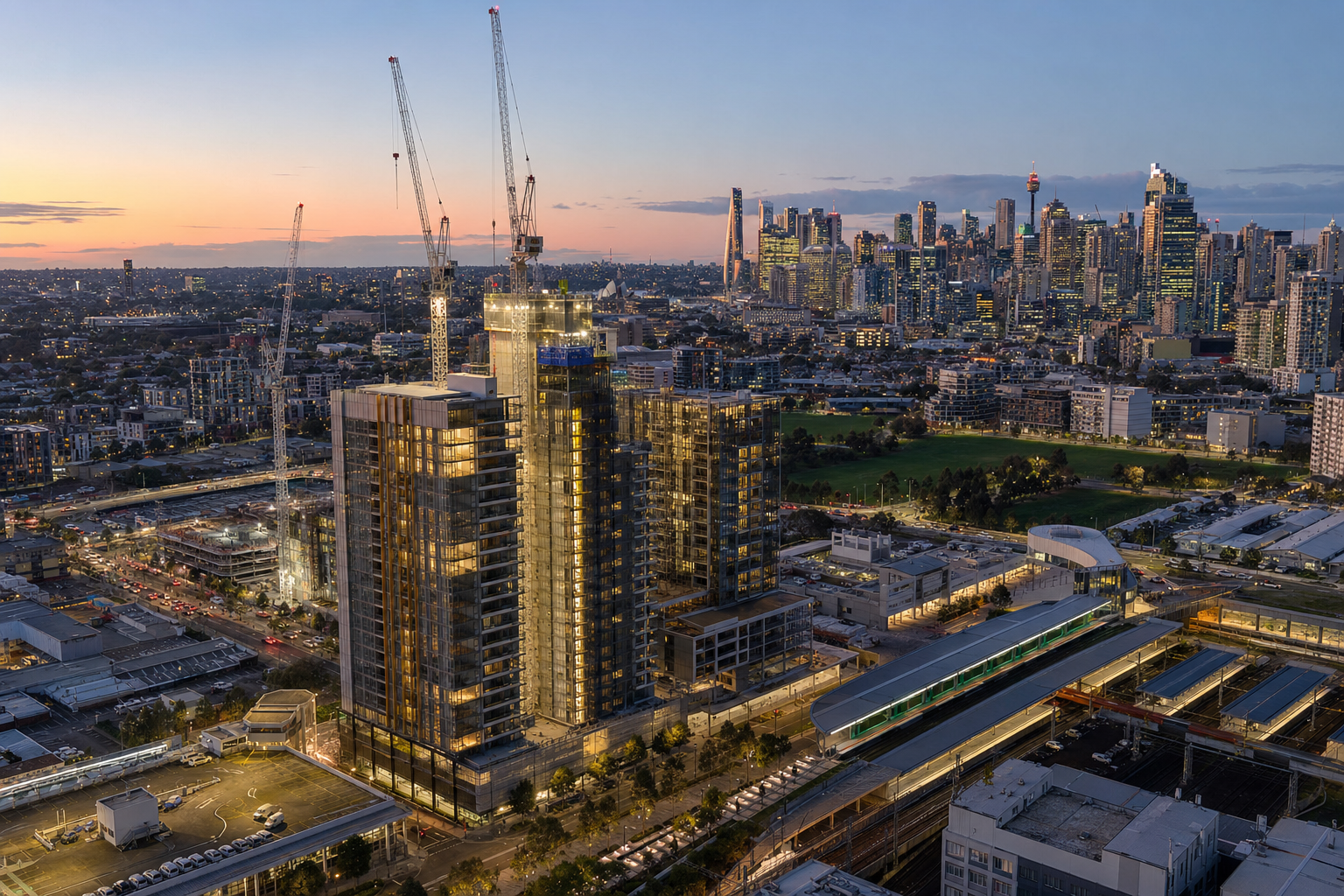
Buying off-the-plan in Green Square when you’re self-employed is possible – but the finance side is less forgiving than for a standard PAYG borrower.
You’re dealing with three moving parts at once: (1) your business income, (2) lender policy and rates, and (3) the final valuation on a brand-new apartment in a high-density area. This guide shows you how to line those up so you can sign a contract – and settle – without nasty surprises.
If you take nothing else away: start planning before you pay a holding deposit, keep your tax and BAS lodgements clean, and size your buffers for both your household and your business.
1. Why off-the-plan is different when you’re self-employed in Green Square
Off-the-plan lending is already more complex because lenders are taking a view on something that doesn’t exist yet. In Green Square and Zetland, you add two more wrinkles:
- High-density, often high-LVR-sensitive buildings.
- Self-employed or variable income the banks don’t see as “simple”.
If you haven’t already, it’s worth reading the broader area guide, “How to Finance a New or Off-the-Plan Apartment in Green Square” for a full overview of timelines and risk points. Here we’ll narrow in on what changes when you own a business or work for yourself.
1.1 Three risks you must manage from day one
For self-employed off-the-plan buyers, three risks matter most:
- Income documentation risk – what your tax returns and BAS actually show when the lender reassesses you.
- Valuation risk – whether the completed apartment values up to the contract price.
- Policy and buffer risk – how lender rules and the required APRA 3% serviceability buffer might change before settlement.
You can’t remove these risks. You can, however, design your purchase so you have options if any of them move against you.
1.2 Why Green Square and Zetland are treated differently by banks
Lenders don’t view all Sydney postcodes the same. Inner-south, high-density pockets – particularly around Green Square Station and central Zetland – often attract:
- Lower maximum LVRs (for example, capping at 80–85% instead of 90–95%).
- Stricter treatment of small apartments (under ~50–55sqm internal).
- More conservative valuations, especially if many similar units are completing at once.
As outlined in “How Green Square Property Types Shape Your Home Loan Options”, the exact building and floor plan you pick can change:
- Which lenders are open to you.
- Whether LMI is required.
- Your borrowing power and cash requirement at settlement.
For self-employed borrowers, that can be the difference between a smooth approval and a shortfall you’re scrambling to cover.
2. How lenders assess self-employed income for off-the-plan
2.1 Full-doc vs alt-doc: which lane are you in?
When you’re self-employed, lenders will usually assess you in one of two lanes:
- Full-doc – you provide at least two years of business and personal financials and tax returns, ATO portals are clean, and income is stable or rising.
- Alt-doc – you don’t have sufficient, consistent lodged returns yet, so you use BAS statements, accountant letters and/or business bank statements to evidence income.
Graduating from alt-doc to full-doc is usually most viable once you have two full years of lodged returns showing stable or increasing income (see /insights/switching-alt-doc-to-full-doc-mainstream-lending). Planning which lane you’ll be in at settlement, not just today, is critical.
2.2 What “serviceability” looks like in practice
All lenders will stress-test your repayments at a buffer above the actual rate, as required by APRA. In practice, that usually means:
- If the actual rate is ~6.00% p.a., lenders may test you at 9.00% p.a. (6% + 3% buffer).
- They will also apply either a benchmark living cost (HEM) or your actual disclosed expenses, whichever is higher.
For small business owners, that stress test needs to sit comfortably alongside your business overheads and any existing business debt. The Roy Morgan research showing around 28.2% of mortgage holders “At Risk” of stress highlights why this buffer matters: rates and income can both move quickly.
2.3 How much income will a lender actually use?
Common patterns for self-employed assessment include:
- Average of the last two years’ taxable income.
- Lower of the last two years, if income has dropped.
- Most recent year only, but only if it’s clearly sustainable and not a spike.
For company and trust structures, lenders often:
- Start with net profit after expenses.
- Add back your salary, director fees and some non-cash items (e.g. depreciation).
- Adjust for one-off items.
They then apply a haircut to variable components such as bonuses, commissions or distributions from discretionary trusts.
Alt-doc lenders may instead use:
- Average of the last 12 months’ BAS turnover, adjusted for expenses and tax.
- Business bank statements to support a declared income figure.
The trade-off is that alt-doc loans often come with:
- Higher rates and/or fees.
- Lower maximum LVRs.
3. Off-the-plan timeline: how far ahead you need to plan
3.1 The typical Green Square off-the-plan journey
A common pattern for new builds around Green Square and Zetland looks like this:
| Stage | Timeframe | What happens | Finance implications |
|---|---|---|---|
| Pre-contract | 0–4 weeks | You inspect display suites, compare buildings, negotiate price | Can get an indicative pre-approval, but it won’t last until settlement |
| Contract exchange | Month 0 | Pay 5–10% deposit, sign contract | No final loan approval yet; you’re committing based on expectations |
| Construction | Months 1–24+ | Building progresses; market moves | Your income, tax position and lender policies may all change |
| Pre-settlement | 1–3 months before completion | Bank orders valuation, reassesses your income and expenses | Actual loan approval is given; any shortfall appears now |
| Settlement | Completion date | You pay the balance and draw down the loan | Need all funds ready – including any extra cash if valuation is low |

The critical mistake is assuming that a pre-approval at contract exchange two years earlier means you’re safe. For off-the-plan, the lender will recheck you closer to completion.
3.2 When to lock in your documentation strategy
For a 18–24 month project, you want a plan that covers:
- This financial year and next – how much income you’ll show.
- Lodgement dates – when returns will be lodged and what they’ll show.
- Any big business changes – new equipment, staff, leases or loans.
Because lenders will use your most recently lodged returns at the time of assessment, a decision to heavily minimise taxable income can directly cut your borrowing power at settlement (see /insights/off-the-plan-valuation-change-before-settlement).
Aim to sit down with a broker and your tax adviser before the end of the financial year prior to settlement and map out:
- Target taxable income you need to evidence.
- What that means for your tax bill and cash flow.
- Whether you’ll likely be full-doc or alt-doc when the bank reassesses you.
4. The Green Square building and LVR side: why your choice matters more when you’re self-employed
4.1 How lenders categorise Green Square and Zetland buildings
As highlighted in “How Green Square Property Types Shape Your Home Loan Options”, banks often apply special rules to:
- High-density towers (typically 50+ units, sometimes flagged by postcode).
- Mixed-use developments (residential with retail or commercial on lower floors).
- Smaller apartments under 50–55sqm internal.
Those rules can mean:
- Lower maximum LVRs (e.g. max 80% rather than 90–95%).
- Stricter minimum sizes.
- Fewer lenders willing to take the building at all.
For a self-employed borrower with already-tighter serviceability, losing 10–15 percentage points of LVR can make a good deal unworkable.
4.2 LVR, LMI and settlement risk in practice
Consider a $950,000 two-bedroom apartment in a mid-rise Green Square building.
| Scenario | Contract price | Final valuation | Max LVR policy | Max loan | Cash required (excl. costs) |
|---|---|---|---|---|---|
| A – Ideal | $950,000 | $950,000 | 90% | $855,000 | $95,000 |
| B – Conservative LVR | $950,000 | $950,000 | 80% | $760,000 | $190,000 |
| C – Val shortfall | $950,000 | $900,000 | 80% | $720,000 | $230,000 |
In Scenario A, you may be able to get 90% LVR with LMI, depending on the building and your profile.
In Scenarios B and C – which are common in high-density zones – you need much more cash. If your business has a lean period just before settlement, that extra $40–135k may not be comfortable.
This is why earlier cluster pieces emphasise a three-part buffer – personal, business and settlement risk (see /insights/build-two-three-year-cash-buffer-off-the-plan). Off-the-plan in Green Square without that buffer is essentially a leveraged bet.
4.3 Practical building filters before you fall in love
Before you commit to a specific building, have your broker run a “policy sense-check”:
- Is the building flagged as high-density or restricted by any major lenders?
- What are typical maximum LVRs for similar stock in this pocket?
- Any history of valuation shortfalls for comparable projects nearby?
Often, there are two or three projects that meet your lifestyle goals, but one will be much easier to finance as a self-employed borrower.
The strategy continues below
You've seen the problem and the groundwork — now unlock the exact steps our CPA-certified brokers use, including 8 more sections. Enter your email for instant, free full access.
Free access. No spam — unsubscribe anytime. Your details stay confidential.
Frequently asked questions
Can I get 90–95% LVR on an off-the-plan Green Square apartment if I’m self-employed?▾
What if my income drops before settlement because I minimise tax?▾
How early should I start planning finance for an off-the-plan purchase?▾
Do I have to go alt-doc if my business is young?▾
How much extra cash should I allow for a valuation shortfall?▾
Can I use business assets or equipment as security to help with the loan?▾
Is it safer to buy a completed apartment instead of off-the-plan?▾
Speak with a specialist advisor
Confidential consultation, bespoke advice for your situation.