Article
Locking In Solar Rebates And Loans Without Missing The Window
A simple, decision‑grade guide to lining up solar quotes, rebates and finance so you don’t miss grant deadlines or blow your cashflow in the process.
Key Takeaway
To time a solar installation around Australian grants and rebates, borrowers should confirm eligibility and program deadlines first, then obtain firm quotes and lock in finance approval before booking installation, as many rebates require system commissioning within 3–12 months. Modelling should stress‑test savings at 20% below quotes and loan costs at rates 3% higher, ensuring a 6–12 month cash buffer. The key actionable step is mapping all dates on one timeline before signing any contract.
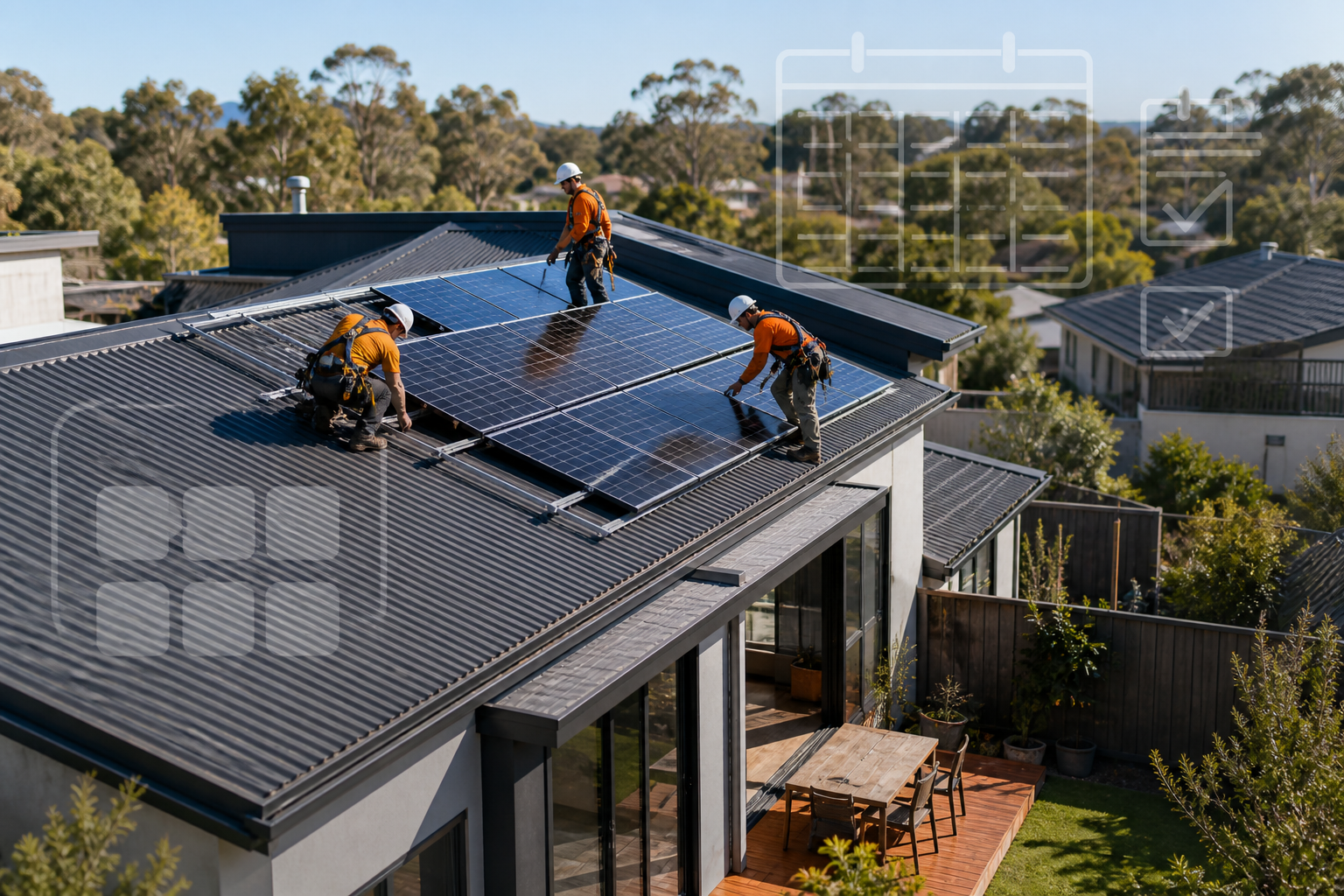
You should time your solar installation so your grant or rebate is guaranteed, your loan approval doesn’t expire, and your cashflow still works if savings disappoint.
The practical order is: check incentives and deadlines → get quotes → secure finance approval → book installation inside both the rebate and loan windows.

Step 1: Map your incentives and their deadlines
Before talking to installers, list every incentive you might use and the key dates.
Common timing rules in Australia (always confirm your state’s current rules):
- STCs (federal) – effectively locked in on installation/commissioning date; prices can move, but there’s no formal closing date yet.
- State rebates / interest‑free loans – often capped per year and require installation and paperwork within 3–12 months of approval.
- Feed‑in tariffs – usually start after your meter is changed and your retailer plan is active, not at installation.
Check your state scheme details and finance traps in more depth here: /insights/state-based-solar-battery-programs-finance-implications-australia.
Create a one‑page list:
- What you’re eligible for now.
- When applications open/close.
- How long you have after approval to install.
If a scheme is near its cap or review date, build in extra time for grid connection and meter changes.
Step 2: Line up quotes before you touch finance
You can’t plan timing or borrowing without a clear system design and cost.
Ask each installer for a written quote that states:
- System size (kW) and hardware brands.
- Cash price before incentives.
- Estimated STC value and state rebate.
- Expected install month and any likely delays.
Remember (from /insights/solar-battery-system-real-cost-australia-2026): in 2026 a quality 6.6 kW system often lands around $5,000–$9,000 after STCs, more with batteries.
Now do a quick finance test:
- Decide whether you’ll use home equity, a green loan, installer finance or business lending.
- Use the same cash price for all options to compare apples with apples.
You don’t need a full application yet, but you do need a realistic budget and a target install window (for example, “within 3 months”).
The strategy continues below
You've seen the problem and the groundwork — now unlock the exact steps our CPA-certified brokers use, including 4 more sections. Enter your email for instant, free full access.
Free access. No spam — unsubscribe anytime. Your details stay confidential.
Frequently asked questions
How far before installation should I apply for solar finance?▾
What happens if my solar rebate approval expires before I install?▾
Can I refinance my mortgage and add solar after the grant is approved?▾
Speak with a specialist advisor
Confidential consultation, bespoke advice for your situation.